Why Does My AC Smell Bad After Cleaning in Dubai?
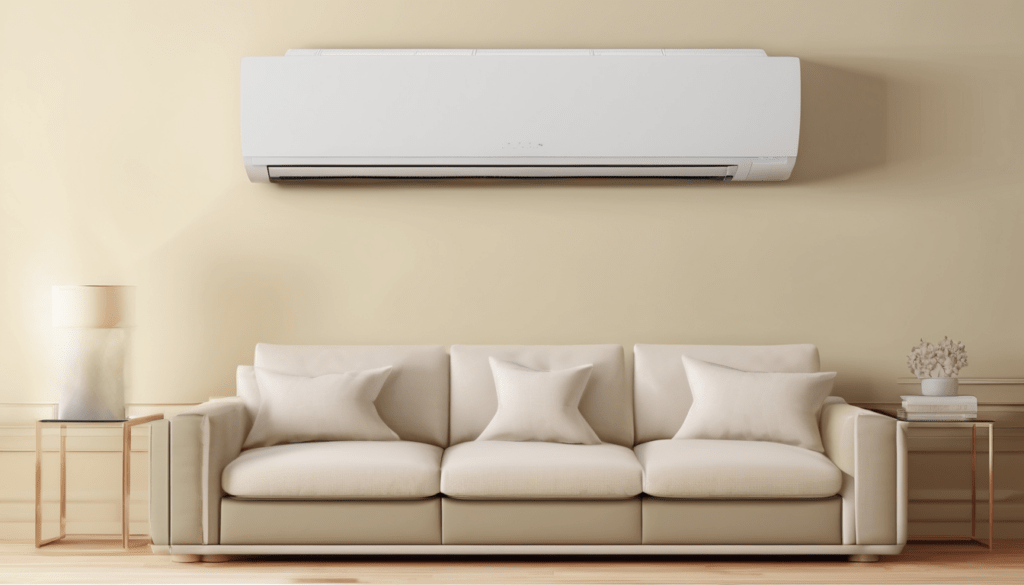
Why Does My AC smell bad after cleaning? The short answer is that cleaning disturbs what was settled inside the system, moisture, biofilm, dust-bound microorganisms, without always removing it completely. In Dubai’s climate, where indoor humidity and continuous cooling demand create near-permanent condensation inside air handling units, the conditions for post-cleaning odour are built into the environment itself. Understanding what the smell is telling you is the first step toward resolving it.
This is one of the more frustrating experiences a homeowner or facility manager can encounter. You invest in a service, the technicians leave, and within hours the air coming through your vents carries an odour that wasn’t there before, or at least wasn’t as noticeable. It feels like the cleaning made things worse. In some cases, it did, temporarily. In others, the cleaning revealed a problem that was already present but masked.
The distinction matters enormously, because the response is different depending on which situation you’re in.
What Happens Inside a Duct System During Cleaning
To understand post-cleaning odour, it helps to understand what professional AC duct cleaning actually does to the interior of a system. NADCA-aligned methodology involves mechanical agitation of duct walls, dislodging accumulated dust, debris, and biological matter, followed by negative pressure extraction and, in most professional protocols, application of an antimicrobial or disinfectant to the cleaned surfaces.
That process is inherently disruptive. Settled biofilm is broken up. Dust-bound fungal spores are mobilised. Residual moisture in drain pans and coil channels is disturbed. If extraction is insufficient or the system is returned to operation before surfaces have dried properly, the liberated material circulates through the airstream rather than being removed from it.
This is the mechanical explanation for most post-cleaning odour complaints. The cleaning was real, but the removal was incomplete.
The Musty Smell; What It Usually Indicates
A musty, earthy, or damp odour after AC cleaning is the most commonly reported complaint, and it has a consistent cause: mold and mildew disturbed but not fully removed from the system. In Dubai, Abu Dhabi, and across the UAE, evaporator coils and drain pans operate in environments where condensation is continuous for most of the year. Microbial colonisation on coil fins, drain pan walls, and internal ductwork is a common finding during professional inspections.
When those colonies are mechanically disturbed during cleaning, volatile organic compounds (VOCs) released by the mold become airborne. The smell intensifies before it improves. If the underlying mold was not treated as part of the cleaning, only the surface dust removed, the smell will persist and typically worsen over the following days.
Why standard cleaning may not resolve mold odour
There is an important distinction between duct cleaning and mold remediation. Duct cleaning removes accumulated dust, particulates, and debris. Mold remediation addresses confirmed microbial colonisation with assessment, source removal, and appropriate treatment. A cleaning service that does not include a disinfection step, or that applies a disinfectant without first confirming the type and extent of contamination, may not deliver what the situation requires.
At 800-MOLDS, Saniservice’s dedicated mold remediation division, the first in the UAE to hold both IICRC and IAC2 certification, the assessment step is non-negotiable. You cannot treat what you haven’t confirmed. That principle applies to every system we encounter, whether it’s a standalone fan coil unit in a Dubai apartment or a central AHU serving a commercial building in Abu Dhabi.
Chemical Smell After Cleaning; When the Solution Is the Problem
A sharp, chemical, or synthetic odour after AC cleaning typically points to residual cleaning agents; disinfectants, coil cleaners, or sanitising sprays; that were not fully flushed or dried from the system before it was returned to operation. This is particularly common when a service is rushed, when the system is switched on too quickly after treatment, or when high-concentration chemicals are applied without adequate rinsing.
Saniservice operates under a minimum-effective-chemical philosophy across all divisions. That means selecting the appropriate intervention first, disclosing every chemistry applied and at what concentration, and ensuring adequate contact time and clearance before the system is restarted. It also means that where biological or mechanical methods achieve the same outcome with less chemical residue, those methods are used.
If a chemical smell is present after a service, ask the provider specifically which products were used, at what dilution, and what the recommended dry time was before the system was reactivated. That question alone reveals a great deal about the standard of service you received.
Burning or Electrical Smell, A Different Category Entirely
A burning, electrical, or acrid smell after cleaning falls outside the moisture and chemistry categories and warrants immediate attention. This type of odour after a service visit can indicate that a component was disturbed during cleaning; a loose electrical connection, displaced insulation touching a coil, or debris that has entered a fan motor housing.
Switch the system off at the isolator, not just the remote, and contact the service provider. This is not a situation to operate the unit through while waiting to see whether it resolves. Electrical faults in AC systems in UAE buildings, where units run continuously through summer months above 40°C, carry a real risk of escalation.
Sewage or Rotten Odour, What This Points To
A sewage-like or rotten smell from an AC system after cleaning often indicates a blocked or improperly cleared drain line rather than a problem with the duct system itself. AC systems produce significant condensate that exits through a drain pan and drainage pipe. If that line is partially blocked, stagnant water accumulates in the drain pan, microbial activity accelerates, and the resulting odour is drawn into the airstream.
Professional cleaning should include drain line inspection and clearance. If it wasn’t included, or if the drain line was cleared but not treated, the smell is likely to return within days in Dubai’s climate. Condensate volumes here are high; continuous cooling against ambient temperatures that regularly exceed 40°C means the system is producing and draining water almost constantly during summer operation.
Dusty or Stale Smell; When the Cleaning Was Insufficient
A flat, dusty, or stale smell after cleaning; not unlike the smell inside an old cupboard; usually indicates that the cleaning was superficial rather than thorough. Access panels were opened, visible grilles were wiped, and perhaps a spray was applied, but the duct interior and coil surfaces were not addressed with the agitation, extraction, and treatment that a full NADCA-compliant clean requires.
In Dubai specifically, fine desert particulate settles deep into duct systems. The dust profile here is not the same as in temperate climates; it includes silica, fine sand fractions, and biological material that binds together in the humidity around coil and evaporator surfaces. A cleaning method that addresses only the visible and accessible surfaces will leave the majority of this material in place.
How Long Should a Post-Cleaning Smell Last
A mild odour for two to four hours after a professional AC clean is within the normal range. Disturbed settled dust has a recognisable smell. Freshly applied disinfectant has a faint scent for a period. A system returning to operation after cleaning may cycle through residual particles that weren’t fully extracted.
Beyond four to six hours, any persistent, distinctive odour, musty, chemical, sewage-like, or burning, is a signal that something requires follow-up. It is not normal, and it should not be waited out. Document the smell as specifically as you can: when it started, which registers it comes from most strongly, whether it’s consistent or worse at start-up. That information helps the service provider diagnose accurately rather than returning with a generic re-spray.
What a Proper Resolution Looks Like
Resolving post-cleaning odour correctly requires a diagnostic step before any further treatment. Returning to apply more disinfectant without understanding what is producing the smell is the equivalent of painting over a water stain; it may reduce the visible sign without addressing the source.
Saniservice specialists approach this through the Indoor Sciences laboratory in Al Quoz, the only in-house indoor environmental microbiology lab operated by a service company in the UAE. Where the source of an odour is unclear, air and surface sampling provides the data needed to direct the response, whether that’s targeted mold treatment, a second mechanical clean of a specific section, drain system work, or a full system assessment.
Lab-verified findings — microbial counts, ERMI mold profiles, surface culture results — replace guesswork with documented diagnosis. That matters particularly when the property is a school, a clinic, a hotel, or a residential building with vulnerable occupants, where the decision about what to treat and how requires defensible technical justification rather than a technician’s impression.
Key Takeaways for Property Owners and Facility Managers
- A post-cleaning odour lasting more than four to six hours is not a normal outcome and warrants follow-up.
- Different smell profiles point to different causes, musty indicates disturbed mold, chemical indicates residual cleaning agents, sewage indicates drain issues, burning indicates a mechanical or electrical concern.
- Duct cleaning and mold remediation are not the same service. If microbial growth is confirmed, a remediation protocol is required alongside or instead of standard cleaning.
- Dubai’s climate amplifies every one of these risk factors, continuous condensation, high ambient humidity, and year-round cooling demand create conditions that require more thorough protocols than a single-pass clean typically delivers.
- Minimum-effective-chemical protocols, drain line inspection, and adequate dry time before system restart are not optional extras; they are part of a complete, professional service.
- When the source is unclear, environmental sampling through a certified indoor sciences laboratory provides the diagnosis that directs the right intervention.
Conclusion
Why does my AC smell bad after cleaning? Almost always, it is telling you something specific about what was found, or not fully removed, during the service. The musty note points to mold. The chemical sharpness points to residual chemistry. The sewage undertone points to the drain. The burning smell demands immediate attention. None of these are reasons to run the system through and hope for improvement.
In the UAE’s built environment, where air conditioning operates under conditions that stress every component of a system continuously, the standard of cleaning matters as much as the frequency. A thorough, NADCA-aligned service that includes disinfection, drain clearance, adequate dry time, and, where warranted, microbial assessment delivers a different outcome than a rapid spray-and-leave visit. The air quality inside your property depends on the rigour of what happens inside the system, not just on whether the grilles look clean.
If an odour has persisted after a recent service, Saniservice specialists are available to assess the system and identify the source. ERMI is a DNA-based index that counts every spore in a dust sample, living or long dead. We culture instead, because living mold is what colonises and spreads.
Frequently Asked Questions
Why does my AC smell bad after cleaning if the technician just finished the job?
Cleaning disturbs settled dust, biofilm, and microbial matter inside the system. A mild odour for two to four hours after service is within the normal range as disturbed particles cycle through. If the smell persists beyond six hours or is distinctly musty, chemical, or sewage-like, it indicates incomplete removal, residual cleaning agents, or an unresolved drain issue that requires follow-up.
How long should it take for the smell to go away after AC cleaning in Dubai?
In Dubai conditions, a faint cleaning or dust odour typically clears within two to four hours of resuming normal AC operation. If any odour, particularly a musty, chemical, or sewer-like smell, persists beyond four to six hours, the system should be inspected. Dubai’s humidity means microbial activity can accelerate quickly when moisture is present inside a duct or drain system.
Is a musty smell from an AC unit a sign of mold?
A persistent musty or earthy odour from an AC system after cleaning is a commonly observed indicator of mold or mildew inside the unit. Evaporator coils and drain pans are frequent colonisation sites. If a cleaning service did not include disinfection and targeted mold treatment, the underlying growth may have been disturbed without being removed. A dedicated mold inspection is the appropriate next step.
Can a cleaning chemical cause a bad smell from my AC?
Yes. Coil cleaners, disinfectants, and sanitising sprays used during AC cleaning can leave residual odours if not fully flushed or dried before the system is restarted. A sharp, synthetic, or chemical smell after service usually indicates either insufficient rinsing or premature system restart. Ask your service provider which chemicals were applied, at what concentration, and what dry time was observed before operation resumed.
Should I turn off the AC if it smells bad after cleaning in an Abu Dhabi apartment?
If the smell is musty or chemical, ventilate the space and allow the system to run for a few hours before deciding on follow-up. If the smell is burning, electrical, or acrid, switch the system off at the isolator immediately and contact your service provider. In Abu Dhabi apartments where centralised AC systems serve multiple units, report the issue to building management as well, as the source may be in shared ductwork.
What is the difference between AC duct cleaning and mold remediation?
AC duct cleaning removes accumulated dust, debris, and particulates from duct surfaces using mechanical agitation and negative pressure extraction. Mold remediation addresses confirmed microbial colonisation through assessment, source removal, and treatment aligned to IICRC or IAC2 standards. If mold is present, cleaning alone is insufficient; remediation protocols are required to address the contamination at source rather than simply disturbing it.
Yes. Indoor air quality testing and surface sampling through a certified microbiology laboratory can identify the specific organisms present, their concentration, and the extent of colonisation. Indoor Sciences, Saniservice’s in-house microbiology laboratory in Al Quoz, provides ERMI mold profiling, surface culture analysis, and mycotoxin panels that document contamination precisely. This kind of lab-verified assessment distinguishes mold-driven odour from chemical or drain-related causes.