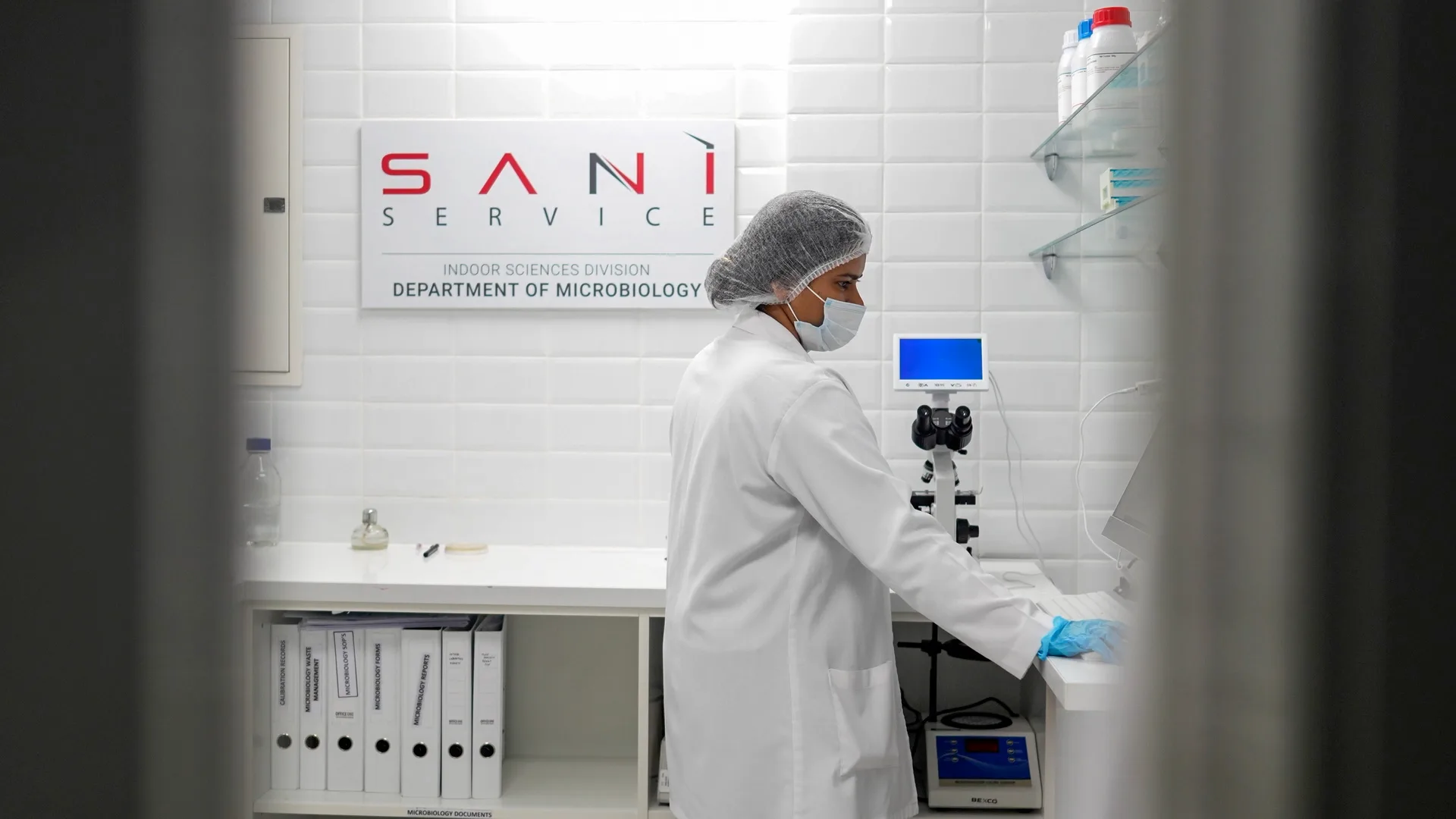
A Saniservice specialist placing a sample dish into an air sampler in a home
The Lab  /  Moldiness Profile

The Saniservice Moldiness Profile

We find where the mold is, what it is, and whether it is alive. Not just a number for the
whole house.

Surface by surface
where the mold is concentrated and where it is not
Culture-based
growing the living fungi on prepared media
Species identified
each species identified under the microscope
In-house lab
our own microbiology laboratory

The Saniservice Moldiness Profile does the opposite.

Most mold tests hand you a single score for an entire home and no idea where the problem actually is.

We sample the specific surfaces in question, culture what grows, identify the species, and show you exactly where the mold is concentrated and where it is not.

What we do

i

We collect settled dust from the surfaces under question, using sterile swabs.

ii

In our own microbiology laboratory we culture it, growing the living fungi on prepared media over several days, then identify each species under the microscope.

iii

For every location sampled, we report the viable fungal species found, flag the ones associated with water damage, give the viable count, and set out our professional assessment of the concern level.

Why we culture rather than read DNA

DNA testing counts every spore in the dust, living or long dead. We culture what is alive, because it is living mold that colonises, spreads, and has to be removed.

And because we sample surface by surface, we can tell you the one thing a single whole-home number never can: where the problem is.

In a recent home, the skirting by a window came back a severe concern, the sink cabinet elevated, and the air-conditioning drainage tray perfectly clean. That is the difference between a number and a map.

The honest part

Told straight

A test is evidence. It is not a verdict.

Culture is the right way to find out what is living and growing in your home. It is also not the only thing we do, and that is deliberate.

  • Culture grows what is alive. Dead spores can still irritate airways and will not appear on a plate. That is the point — living mold is what spreads and what has to be removed. It is also why we never read a sample on its own. The moisture investigation is what tells us whether we are looking at old history or an active problem.
  • Fast species can crowd out slow ones. Aspergillus and Penicillium grow quickly and can mask quieter species that matter more. This is why a microbiologist reads your plates rather than a machine printing a score, and why we sample in several places rather than one.
  • A sample is a moment. Airborne counts move with the hour, the humidity and whether the AC is running. We sample where the moisture investigation tells us to look, rather than at random, so the result reflects the problem and not the timing.
  • Counts show scale, not dose. A CFU figure tells you how much is there against a clean baseline. It does not tell you what any one person will feel. That is a conversation for a doctor; what we handle is the building.

None of this is a reason to test less. It is the reason we do not sell a test as an answer. The laboratory tells us what is growing. The inspection tells us where it is coming from. You need both, and both are included.

What you receive

A location-by-location profile: the species identified at each point, the viable counts, the water-damage indicators flagged, and a clear concern level for each surface. So that remediation targets the source, rather than guessing at it.

Where it fits

So that remediation targets the source, rather than guessing at it.

Mold remediation →
A specialist test, told straight

Not just a number for the whole house.

Ask about the Moldiness Profile

This is a laboratory assessment of the fungi present in the samples taken. It is not a statement about anyone's health; health questions belong with a doctor.