What Does an AC Repair Service Check in Dubai?
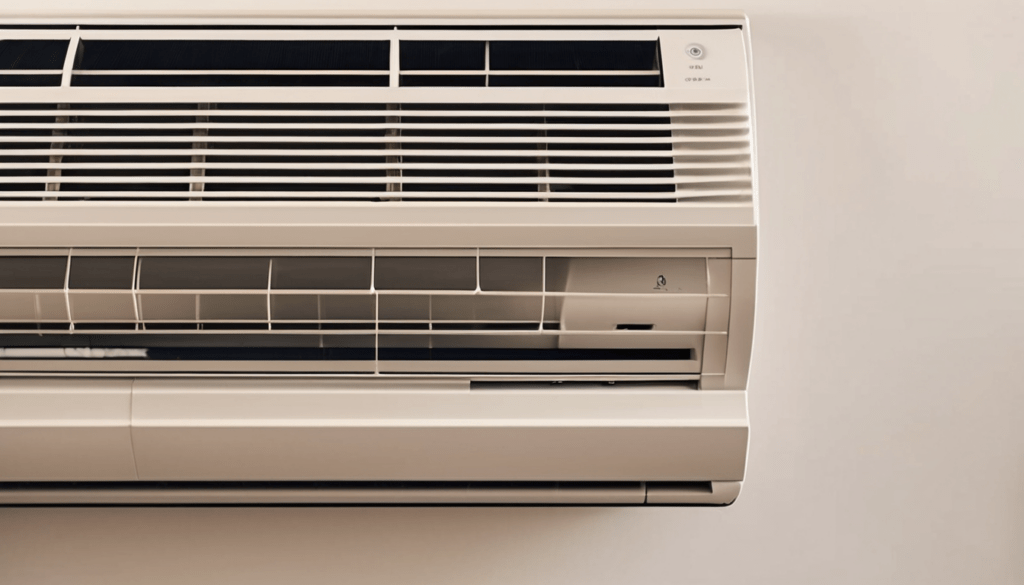
What Does an AC Repair Service Actually Check is a question worth answering precisely, because in Dubai’s climate, a vague answer leads to missed diagnoses and repeat call-outs. A qualified repair service examines the refrigerant circuit, electrical components, drain system, coil surfaces, blower assembly, and control logic — not as a checklist performed identically on every unit, but as a structured investigation shaped by what the unit presents on the day. Every finding informs the next one.
The case described below came from a three-bedroom villa in Jumeirah. The client had already had two separate contractors attend in the same season. Neither had resolved the problem. By the time the Saniservice team arrived, the unit was running continuously, barely cooling, producing intermittent water marks on the ceiling near the cassette, and emitting a damp, musty odour when the fan first started each morning. Three separate symptoms. One underlying system failure — identified only when the inspection was treated as a diagnostic sequence rather than a parts-swap exercise.
What follows is that diagnostic sequence, explained from first contact to final verification.
The Complaint That Arrived With Three Symptoms
The homeowner’s description was precise: the unit ran all day but the room never reached the set temperature, there were occasional water marks on the ceiling panel around the cassette, and the first hour of operation each morning carried a damp smell that faded over time.
Two previous contractors had each addressed a single symptom in isolation. One had topped up refrigerant without finding why it had depleted. The other had cleared the drain line. Neither had connected the symptoms to an underlying cause. The ceiling staining continued. The cooling shortfall persisted.
This is the pattern that poor repair practice produces: treating outputs rather than causes. A qualified repair visit starts differently — it starts by treating the system as one integrated circuit before touching anything.
What the Technician Does Before Opening Anything
Operational observation under load
Before any panel is removed, the unit is run in its current state so the technician can observe live behaviour. Discharge air temperature is measured at the grille. The delta-T — the difference between return air temperature and supply air temperature — is recorded. In a functioning system, this differential should fall within a predictable range; a narrow delta-T under full load points immediately toward either a refrigerant fault or a heat-transfer problem at the coil.
In the Jumeirah villa, the delta-T reading taken at the cassette grille was significantly compressed. The unit was moving air but transferring very little thermal energy. That single reading narrowed the fault category before a panel had been touched.
Electrical supply verification
Supply voltage and amperage draw are checked at the disconnect. Undervoltage causes compressors to run hot and short-cycle; overcurrent draw indicates mechanical resistance somewhere in the system. Both readings were within acceptable range at the Jumeirah unit, which directed attention away from the electrical supply and toward the mechanical refrigerant side.
Inside the Air Handler — What the Coil Reveals
When the air handler panel was opened, the evaporator coil presented immediately. It was partially blocked — not by standard dust accumulation, but by a compacted biofilm layer across the lower fin rows combined with residual ice formation on the upper rows. Ice on an evaporator coil in a running system is a diagnostic signal, not a cosmetic finding.
Coil icing occurs when airflow across the coil is restricted, when refrigerant charge is low, or when both conditions exist simultaneously. In this case, the biofilm was reducing airflow through the lower coil surface. The restricted airflow was causing the upper coil to operate below the dew point continuously, leading to ice formation. As the ice melted during off-cycles, it exceeded the drain pan’s capacity and backed up into the ceiling void.
The ceiling water marks were not a drain line problem. They were a coil problem expressed at the drain pan. The previous contractor had cleared a drain line that had not been the source.
The Refrigerant Circuit Inspection
Pressure testing and charge verification
Manifold gauges were connected to both the high-side and low-side service ports. Suction pressure, discharge pressure, and subcooling were recorded against the unit manufacturer’s specification for the ambient conditions that day. The readings confirmed what the delta-T and coil ice had already suggested: the refrigerant charge was marginally low — consistent with a slow leak rather than a catastrophic loss.
Leak detection before recharge
This is the step the first contractor had skipped. Topping up refrigerant into a leaking circuit is not a repair — it is a temporary pressure restoration that delays the next call-out. The technician traced the circuit systematically using an electronic leak detector, working from the service valves outward. A slow leak was located at a flare fitting on the liquid line near the indoor unit, likely disturbed during a previous installation or access event.
The fitting was recovered, re-flared, pressure-tested, and the circuit was evacuated before a measured recharge was performed to manufacturer specification. This is the standard the circuit demands — not approximation by feel, but a documented charge by weight.
The Drain System — What a Proper Check Actually Covers
A drain line clearance is the most commonly performed and most superficially understood element of any AC service. The line itself is only one component of the drainage circuit. A complete drain inspection covers the pan slope, the pan integrity, the condensate outlet connection, the line routing, the discharge point, and the presence of algal or biofilm growth inside the pan itself.
In the Jumeirah villa, the drain pan showed significant biofilm accumulation and a hairline crack at the rear corner — almost certainly the secondary source of the ceiling moisture. The crack had not been visible on a casual inspection; it became apparent only when the pan was dry-wiped and examined under a light directed at a low angle across the surface.
The pan was cleaned, the crack sealed with the appropriate condensate-rated compound, and the drain line was flushed through and confirmed clear at the discharge point outside the building.
The Blower Assembly and Air Path
The blower wheel is one of the most frequently neglected components in a residential split or cassette unit in the UAE. Fine desert dust, combined with the humidity that accumulates on a continuously running evaporator, creates a layered deposit on the blower wheel blades that progressively reduces airflow volume and disrupts the blade geometry.
At the Jumeirah villa, the blower wheel showed heavy fin deposits — consistent with a unit that had not received a deep mechanical clean in more than two years. The wheel was removed, cleaned ultrasonically at the workshop, and reinstalled. Before-and-after airflow measurements at the grille were documented.
Airflow volume directly affects every other parameter in the system. A partially blocked blower forces the compressor to work harder to achieve a set temperature, increases refrigerant circuit stress, and creates the conditions — restricted air over the coil — that had been enabling ice formation.
Electrical and Control Component Verification
Capacitors and contactors
Capacitor condition is measured with a microfarad reading, not estimated visually. A capacitor that tests within tolerance on a cool morning may fail under sustained load at 43°C. Capacitor values are recorded against the rated value printed on the component and compared to the acceptable tolerance band. The condensing unit at the Jumeirah property showed a run capacitor reading at the low edge of its tolerance band — it was replaced as a preventive measure rather than waiting for a failure that would have occurred under peak summer load.
Control board and thermostat logic
The room controller and main control board are verified by running the unit through its full operational mode range: cooling, fan-only, and where applicable, dry mode. Error codes stored in non-volatile memory are retrieved and documented. In this case, no stored fault codes were present — the system had been experiencing a slow degradation rather than a discrete electronic failure.
The Damp Smell — Traced to Its Source
The damp smell the homeowner had described was the last symptom investigated, and by the time the coil, pan, and blower had been addressed, its source was already resolved. The odour was a direct product of the biofilm on the coil surfaces and blower wheel — microbial activity in a warm, moist environment producing volatile compounds carried into the room with the supply air.
This addresses the microbial load rather than masking the symptom. The odour on the following morning was absent.
What the Final Verification Covered
A repair is not complete at the point where the last component is reinstalled. The Saniservice protocol closes every repair visit with a functional verification under operating load: delta-T re-measured and recorded, amperage draw confirmed within specification, condensate flow confirmed through the drain outlet, and airflow volume measured at the supply grilles.
These figures were documented in a service report left with the homeowner. The delta-T reading at sign-off was substantially improved over the reading taken on arrival. Cooling capacity was restored to the system’s design performance for the conditions present that day.
Key Takeaways for Dubai Homeowners
- A qualified repair inspection reads symptoms as a connected system, not as isolated faults to be addressed one at a time.
- Refrigerant topping without leak detection is not a repair — it is a delay.
- Coil ice in a running system is a diagnostic signal requiring investigation of both airflow and refrigerant charge.
- Drain pan condition, not just drain line clearance, determines whether condensate overflow will recur.
- Blower wheel deposits directly affect delta-T, compressor load, and coil icing risk.
- Capacitor condition should be measured, not estimated visually, before the peak summer season.
- A service report documenting before-and-after measurements is the difference between a repair and a visit.
Frequently Asked Questions
What does an AC repair service actually check on a Dubai villa cassette unit?
A qualified repair service checks refrigerant pressure and charge, evaporator coil condition, blower wheel cleanliness, drain pan integrity, drain line flow, capacitor values, supply voltage, amperage draw, and control board error history. In Dubai’s climate, coil biofilm and blower deposits are among the most commonly identified contributing factors alongside refrigerant faults.
Why does my AC keep losing refrigerant after a top-up in Dubai?
Refrigerant does not deplete naturally — it leaks. If a unit requires repeated top-ups, a slow leak is present somewhere in the circuit. Common leak points in UAE villa and apartment systems include flare fittings at the indoor unit, service valve packing, and vibration-fatigued sections of copper line sets. Leak detection before recharge is a non-negotiable step in a legitimate repair.
What causes ice to form on an AC evaporator coil?
Ice formation on the evaporator coil occurs when the surface temperature drops below freezing due to restricted airflow, low refrigerant charge, or a combination of both. In UAE properties, a compacted biofilm or heavy dust deposit on the coil fins or blower wheel is frequently identified as the airflow restriction driving the icing. Addressing the coil and blower condition resolves the icing before refrigerant work is needed.
How long does an AC repair visit take in Dubai?
A properly scoped repair visit — one that includes a full diagnostic sequence, not just a parts swap — typically takes between two and four hours depending on system type and the complexity of findings. Units requiring coil cleaning, blower removal, or leak detection work take longer than visits limited to a component replacement. Rushing the diagnostic phase is the primary reason repeat call-outs occur.
Is the damp smell from an AC unit in Dubai a health concern?
A persistent damp or musty smell from a running AC unit is typically produced by microbial activity on the evaporator coil, in the drain pan, or on the blower wheel. While not all biofilm produces clinically significant exposure, the presence of active microbial growth in the air path means that supply air is passing over a contaminated surface before it reaches the room. Mechanical cleaning followed by an approved bio-sanitiser application is the recommended response.
Can a ceiling water stain always be traced back to the AC drain line?
Not always. In cassette installations, ceiling water marks can originate from drain pan overflow caused by a cracked or poorly sloped pan, coil ice melt exceeding drainage capacity, or a blocked secondary drain outlet — not solely a blocked primary drain line. A drain line clearance that does not include pan inspection addresses only one of several possible sources and may not resolve the staining.
How often should an AC unit in a Dubai villa be serviced to avoid repair calls?
Saniservice field observations across Dubai villa properties suggest that units receiving documented annual service — covering coil cleaning, blower wheel inspection, drain pan treatment, and electrical component verification — require significantly fewer unplanned repair visits than units maintained only when a fault presents. Pre-summer service, typically before April, is the most effective timing given the operational demands of June through September. Understanding An AC Repair Service Actually Check is key to success in this area.