AC Installation Angle Wrong: How It Causes Leaks
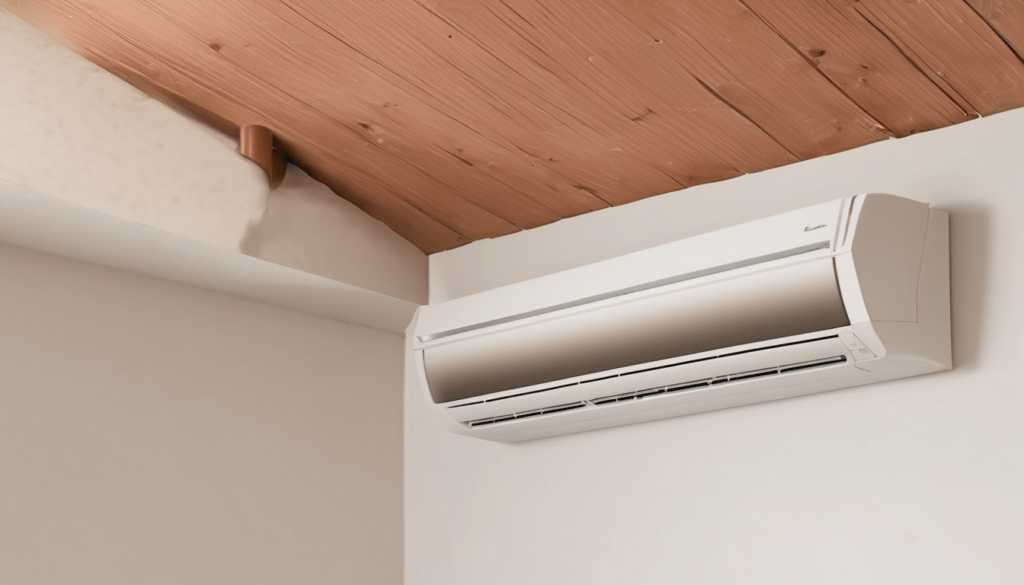
Understanding AC Installation Angle Wrong: How It Causes Leaks is essential. An AC installation angle wrong by even a few degrees is enough to cause persistent water leakage inside a room. When a split-unit indoor head is mounted without the correct outward tilt, typically between one and three degrees toward the drain outlet, condensate water that collects in the drain pan cannot flow to the pipe. Instead, it pools, overflows, and drips onto walls, ceilings, or floors. In Dubai’s climate, where air conditioning runs almost continuously and humidity loads are high, this is not a minor inconvenience. It is a source of ongoing structural moisture damage if left uncorrected.
This article addresses AC installation angle wrong scenarios directly: what the correct tilt should be, how to recognise whether your unit has been mounted incorrectly, and what a professional service involves when the fix requires repositioning the bracket and verifying the full drainage path.
AC Installation Angle Wrong: How It Causes Leaks – Why the Installation Angle Matters for Condensate Drainage
Every split-system air conditioner produces condensate as a natural by-product of cooling. When warm, humid indoor air passes across the evaporator coil, moisture in the air condenses onto the cold coil surface and drips into a shallow drain pan beneath it. That pan is not designed to hold water indefinitely. It is designed to channel water continuously toward a drain outlet and out through a condensate pipe.
Gravity does the work; but only if the drain pan is angled correctly. The indoor unit must tilt very slightly toward the drain outlet side so that water flows to the pipe rather than sitting flat or running the wrong way. When the AC installation angle is wrong, the pan becomes a static collection point. Water accumulates until the pan overflows, and that overflow goes directly into the room.
This is a physics problem, not a manufacturing defect. The unit itself is typically functioning normally. The fault lies in how it was positioned on the wall bracket during installation.
AC Installation Angle Wrong: How It Causes Leaks – How an AC Installation Angle Wrong Manifests as a Leak
The symptoms of an incorrect installation angle are easy to confuse with other causes of AC water leakage, such as a blocked drain pipe or a frozen evaporator coil. However, there are patterns that point specifically to a tilt problem.
Water Dripping from One Side of the Unit
When the installation angle is wrong and the unit tilts away from the drain outlet, condensate runs to the opposite side of the pan, the side with no drainage. Water then overflows from that far end and drips down the front or side of the unit. If you notice water consistently appearing from one specific corner of the indoor unit, incorrect tilt is a strong candidate cause.
Water on the Wall Behind or Below the Unit
In some cases, the pan overflow runs behind the unit casing and saturates the wall directly. Dubai apartment walls and villa interiors are particularly susceptible here because paint, plaster, and gypsum board absorb moisture quickly. Staining or paint bubbling directly beneath an indoor unit, especially when the AC appears to be cooling normally, often traces back to a drain pan overflow caused by an AC installation angle wrong from the original fit.
Leaks That Worsen in High-Humidity Conditions
When ambient humidity is high, as it is across Dubai, Abu Dhabi, and Sharjah from May through September, evaporator coils produce significantly more condensate than in dry conditions. A drain pan that is borderline manageable during mild weather can overflow consistently during peak summer because the condensate volume overwhelms the pan’s limited capacity to hold water before it trickles to the drain. If leaks only appear or worsen in summer, the installation angle may be marginal rather than obviously wrong, but correction is still warranted.
AC Installation Angle Wrong: How It Causes Leaks – The Correct Installation Angle for Split AC Indoor Units
Most manufacturers specify that the indoor unit should be installed with a slight downward tilt toward the drain pipe outlet, generally one to three degrees. This is a small angle, but it is deliberate. It ensures that any condensate forming anywhere along the bottom of the evaporator coil will flow toward the outlet by gravity.
When installers rush a job or mount the bracket without using a spirit level, units often end up level, which sounds correct but is actually insufficient, or, worse, tilted away from the drain outlet. A unit that is perfectly horizontal will still drain slowly and incompletely. A unit tilted the wrong direction will not drain at all under normal condensate loads.
Checking installation angle requires removing the front cover, observing the drain pan directly, and using a spirit level against the base of the unit. This is not a visual inspection from the front fascia. The fascia is designed to look horizontal even when the unit behind it is not.
AC Installation Angle Wrong Combined With Other Drainage Problems
In Dubai properties, an AC installation angle wrong rarely exists in isolation. Field investigations frequently find that a tilted unit has also accumulated a partially blocked drain pipe or a drain pan with residue from years of operation. Each factor compounds the other.
A drain pipe that is 60 to 70 per cent clear under normal conditions may still handle condensate adequately when the unit is angled correctly. The same pipe, combined with an incorrect tilt that pools water at the wrong end of the pan, will overflow consistently. Correcting only the angle without clearing the drain pipe, or clearing only the pipe without correcting the angle, produces incomplete results.
Saniservice technicians routinely assess both installation angle and drainage continuity as part of a single inspection, because isolating one variable while leaving another unaddressed prolongs the leak problem rather than resolving it.
How AC Installation Angle Wrong Affects Drain Pan Integrity Over Time
Drain pans in split-system units are typically manufactured from ABS plastic or galvanised steel. Both materials are resilient under normal operation. However, when an incorrect installation angle causes water to sit stationary in one area of the pan rather than draining continuously, the conditions for biological and chemical degradation accelerate.
Standing condensate water becomes a medium for microbial growth, including biofilm and mold colonies that can extend from the drain pan into the evaporator coil block above it. Over time, this microbial load contributes to poor air quality and odour. Additionally, the constant presence of stagnant water can corrode drain pan edges or warp plastic pans, eventually creating secondary leak points that are independent of the original tilt problem.
This is a relevant concern across all property types in the UAE, from labour accommodations in industrial zones to premium villas on Palm Jumeirah, because the biological consequences of standing condensate are not determined by property value. They are determined by how long the condition is allowed to persist.
Diagnosing Whether Your AC Installation Angle Is Wrong
A professional diagnosis of an AC installation angle wrong issue involves several steps that go beyond a surface observation.
Spirit Level Assessment
The indoor unit housing must be opened and a spirit level applied directly to the drain pan or the unit chassis. Most experienced HVAC technicians carry an accurate level for exactly this purpose. A deviation of more than one degree away from the drain outlet side is considered an installation fault worth correcting.
Drain Pan Water Pooling Test
With the unit running and condensate forming, a technician can observe where water collects in the pan and whether it moves toward the drain outlet or accumulates on the opposite side. This is a simple but definitive test that takes only a few minutes of observation.
Bracket and Wall Fixings Inspection
Correcting an incorrect installation angle requires adjusting the wall bracket. Before this is done, the bracket fixings should be inspected to confirm they are secure in the wall substrate. In older Dubai apartments and villas, brackets are sometimes fixed into gypsum board rather than concrete backing, which can compromise stability after adjustment. This inspection protects both the technician and the property.
How AC Installation Angle Wrong Is Corrected Professionally
The correction process is straightforward when approached methodically. The indoor unit is switched off and, in most cases, temporarily disconnected from the wall bracket. The bracket is adjusted, either by shimming one side or by repositioning fixings, to achieve the correct outward tilt. The unit is then remounted, levelled precisely, and a condensate flow test is run to confirm that water moves cleanly to the drain outlet.
Where the drain pipe is also partially blocked or incorrectly sloped, this is cleared and re-routed as part of the same service visit. There is no value in correcting the installation angle without verifying that the drain pipe downstream is also free and correctly pitched.
Following the correction, the drain pan is cleaned and disinfected to address any microbial growth that developed during the period of standing water. This step is consistent with Saniservice’s minimum-effective-chemical approach: addressing the source of the biological problem, the stagnant water, rather than applying broad-spectrum disinfectants as a substitute for proper drainage correction.
Expert Tips for Avoiding AC Installation Angle Problems in Dubai
- Always request that the installing technician confirm installation angle with a spirit level before the job is signed off. This takes under two minutes and prevents a recurring leak problem.
- If a newly installed unit leaks within the first few weeks of operation, tilt is one of the first causes to investigate; not only a blocked drain pipe, which is less likely in a new installation.
- During annual AC service visits, ask the technician to confirm that the installation angle remains correct. Bracket fixings can loosen over time in Dubai’s thermal cycling conditions, allowing the unit to shift.
- Units installed in high-humidity rooms, bathrooms, laundries, kitchens, produce more condensate and tolerate less margin on installation angle. Extra care at installation is warranted in these locations.
- If you observe water dripping from only one side of the indoor unit, document it with a photograph before calling for service. The location of the drip gives the technician immediate directional information before they arrive.
When to Call Saniservice for an AC Installation Angle Wrong Assessment
An AC installation angle wrong problem does not resolve on its own, and the water damage it causes accumulates with every operating cycle. If you are experiencing persistent dripping from an indoor unit, particularly from one side only, or immediately after a unit was recently installed or moved, a professional assessment is the appropriate next step.
Saniservice HVAC technicians are trained to diagnose both the physical installation angle and the complete drainage path, including the drain pan condition, drain pipe routing, and condensate pump function where applicable. The service scope is determined after a site inspection rather than from a generic checklist, because every installation in Dubai, Abu Dhabi, Sharjah, and across the other UAE emirates has its own configuration and history.
Leaving a drain pan overflow uncorrected in a UAE property is not simply a comfort issue. It is a moisture management issue that can affect wall integrity, ceiling plaster, and indoor air quality over a surprisingly short period in a high-humidity, high-operating-hours environment.
Frequently Asked Questions
How do I know if my AC installation angle is wrong?
The most common signs are water dripping consistently from one side of the indoor unit, staining or dampness on the wall directly beneath the unit, and leaks that worsen during humid weather. A professional technician can confirm the issue by applying a spirit level to the unit chassis and observing condensate flow in the drain pan during operation.
What is the correct tilt angle for a split AC indoor unit?
Most manufacturers specify a slight downward tilt of one to three degrees toward the drain outlet side of the unit. This small angle is sufficient to allow gravity to move condensate water consistently toward the drain pipe. A perfectly level installation is not optimal and may result in slow, incomplete drainage over time.
Can a wrong AC installation angle cause mold inside the unit?
Yes. When condensate pools in the drain pan due to an incorrect tilt, stagnant water creates conditions that support biofilm and mold growth. Over time, microbial colonies can extend from the drain pan into the evaporator coil block, contributing to poor indoor air quality and musty odours that are commonly reported by Dubai homeowners.
Is AC installation angle a common problem in Dubai apartments and villas?
It is more common than most homeowners realise. In Dubai, Abu Dhabi, and Sharjah, AC units are frequently installed during rapid fit-out phases where speed is prioritised over precision. Spirit levels are not always used, and minor tilt errors that go unnoticed during cool months become visible water leaks once peak-summer humidity raises condensate volumes significantly.
Can I correct an AC installation angle myself?
Adjusting a wall bracket without proper training carries real risk: the unit can shift unexpectedly, refrigerant lines and drain pipes can be stressed, and bracket fixings may not be appropriate for the wall substrate behind them. A professional assessment ensures the correction is permanent, the bracket is secure, and the drain path downstream is also clear and correctly pitched.
How does an AC installation angle wrong differ from a blocked drain pipe?
A blocked drain pipe typically causes water to back up and overflow from the centre or bottom of the unit after the drain pan fills completely. An incorrect installation angle usually causes water to drip from one specific side of the unit before the pan is fully loaded. Both problems can occur simultaneously and are frequently found together during professional inspections in UAE properties.
Will correcting the installation angle stop AC water leakage permanently?
Correcting the installation angle resolves the drainage failure caused by incorrect tilt, but a complete fix also requires clearing any accumulated blockage in the drain pipe, cleaning the drain pan, and verifying that the full condensate path is unobstructed. A professional assessment addresses all contributing factors in a single visit rather than isolating one variable at a time.