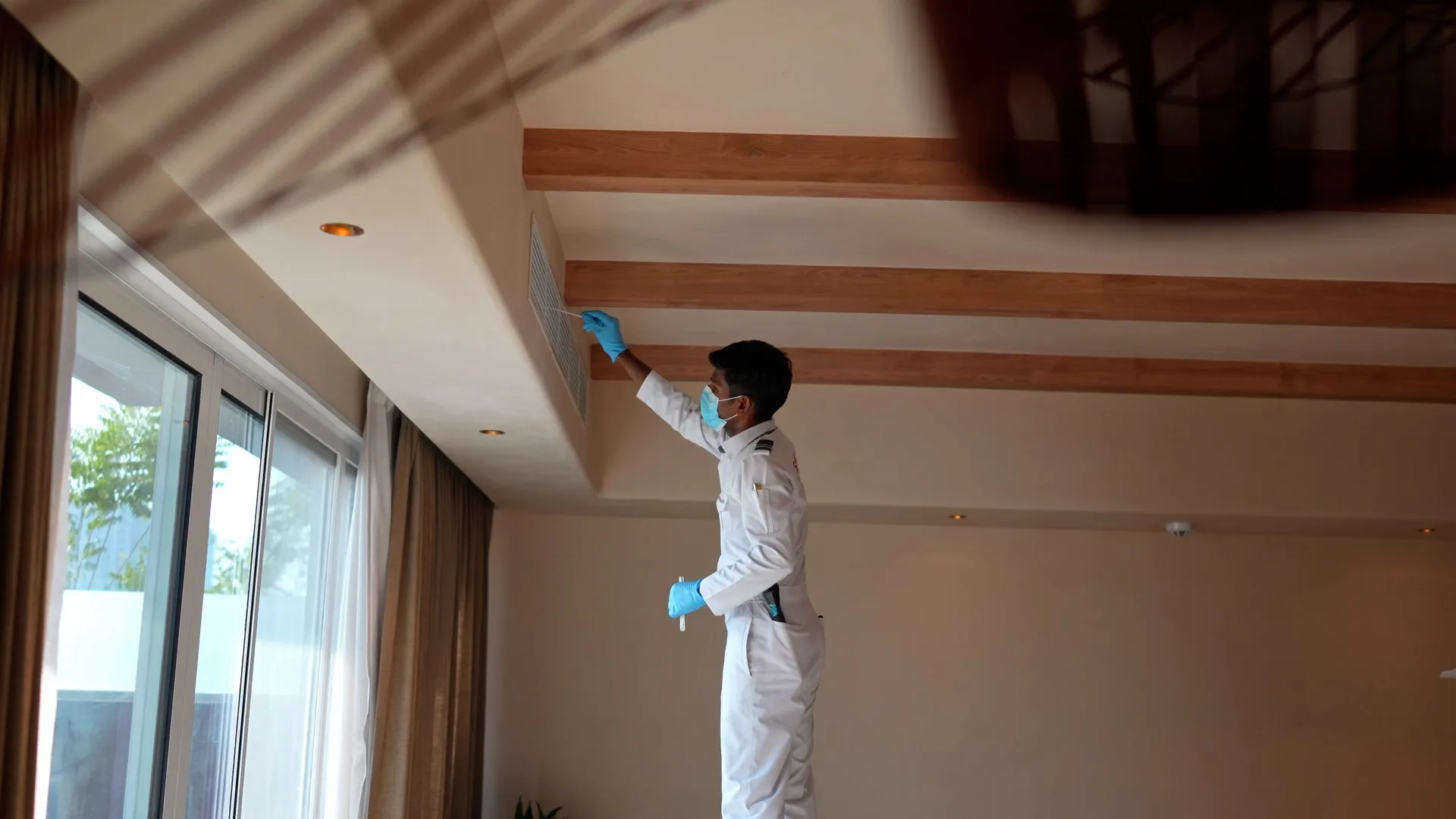
Is that mark mold, or just a mark? Is it active? Is it gone after the work? Surface testing settles it by sampling the surface, not judging it by eye.
Surface testing samples a surface directly, by swab for what is there, by tape-lift to lift visible growth intact, and analyses it in our own microbiology laboratory: identifying the molds or bacteria present and quantifying how much. The result is read against IICRC S520 professional practice and the ordinary indoor-to-outdoor context, so a count means something rather than floating on its own.1
The eye is a poor instrument for this. A dark mark can be mold, or mineral staining, or old soot; visibly clean can still carry a microbial load; and a surface that looks remediated is not the same as one shown to be. Sampling is what turns a guess into a reading.
Most surface-testing requests are really one of these three. Each has a clear answer once the surface is sampled.
A tape-lift taken from the mark lifts the growth intact for identification, separating genuine mold from mineral staining, soot or efflorescence, and naming the type if it is mold.
A swab quantifies the microbial load and identifies what is present, read against professional practice and the indoor-to-outdoor context, so the number is interpreted, not just reported.
Post-remediation clearance sampling checks that a treated surface is verifiably clean, not just visibly clean, before the area is signed off. It is how a remediation is proven, rather than assumed.
A surface sample is powerful and also limited. Both halves matter, so here they are plainly.
We sample so that a surface is described, not assumed, and we are clear about the limits because a number read without context can mislead. The honesty is the service.
The surface is assessed in context first, then sampled by the right method for the question: tape-lift to identify visible growth, swab to quantify load, clearance sampling to confirm a result.
Samples are cultured and read by our own microbiology team rather than sent to a generic provider. Our laboratory is a working instrument for this, built to recognised methods, though it is not itself an accredited certifying body, and we do not imply that it is.
You receive what was found, what it means against professional practice, and what it does not mean. Where it points to a problem, the next step is finding and correcting the moisture source, not chasing the count.
Surface testing is most valuable alongside remediation: identifying the problem before, and confirming clearance after. As the UAE's only IAC2-certified mold team, we treat the cause, then verify the surface. It is also the surface reading behind OLI-Surface, scored against IICRC S520.
Ask us about surface testing. We will tell you whether sampling is the right step, take it properly if it is, and interpret it honestly either way.
Ask about surface testingSaniservice presents environmental measurements only. Surface testing characterises a surface against professional practice; it is not a statement about any individual's health, and its results are interpreted alongside inspection and professional judgement, not in isolation.