


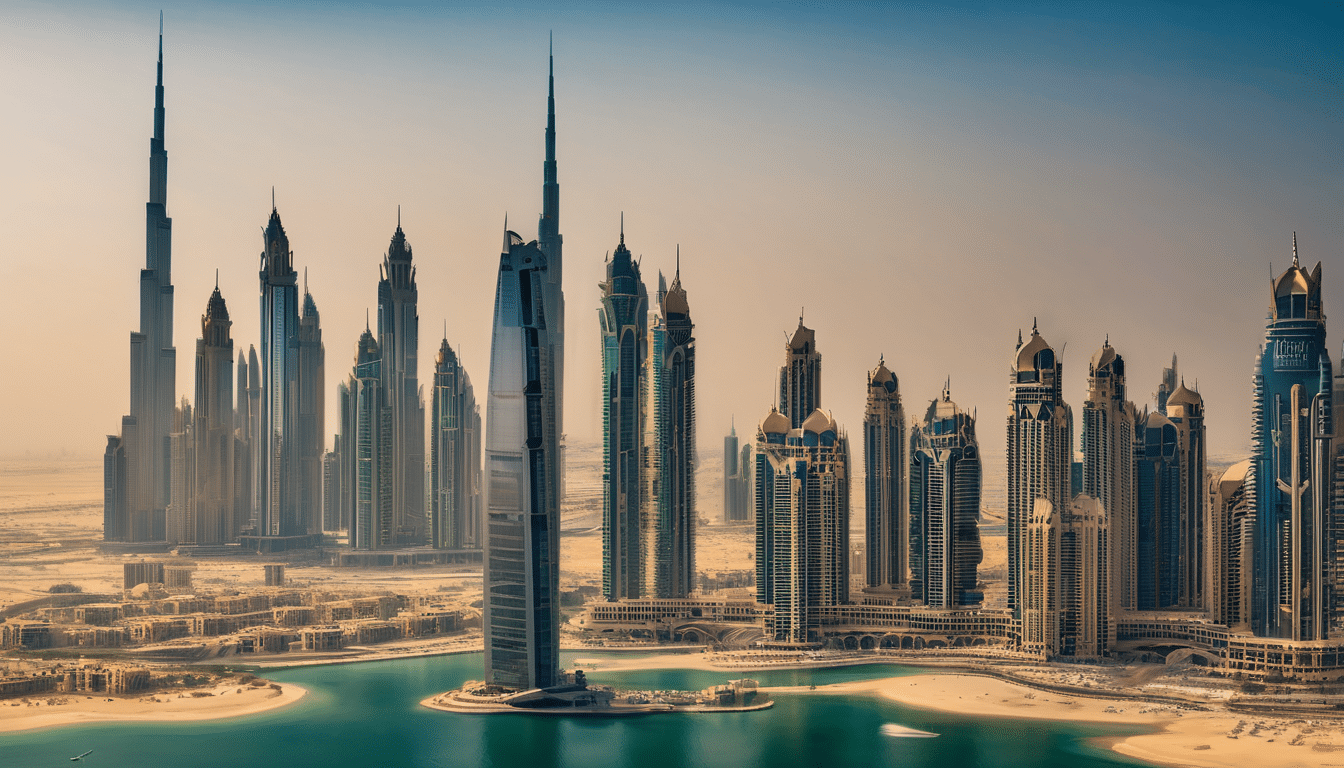
Dubai IAQ Standards and Compliance Guide
In Dubai’s rapid urban expansion, maintaining high indoor air quality (IAQ) protects occupant health and supports sustainability goals. The Dubai IAQ Standards and Compliance Guide outlines key regulations like ASHRAE 62.1-2022 and Al Sa’fat, essential for villas, offices, and commercial spaces. These standards address pollutants such as PM2.5, VOCs, and CO2 in the region’s hot, dusty climate.
This guide connects directly to broader efforts, such as the Indoor Air Quality Assessment Case Study Analysis, where precise monitoring reveals compliance gaps. Property managers and developers must navigate these rules to avoid costly retrofits and ensure wellbeing.
Table of Contents
- Key Dubai IAQ Standards
- ASHRAE Standards in Dubai
- Al Sa’fat Green Building System
- Step-by-Step Compliance Guide
- Key IAQ Parameters to Monitor
- Challenges and Practical Solutions
- Link to IAQ Assessment Case Studies
Dubai Iaq Standards And Compliance Guide: Key Dubai IAQ Standards Overview
Dubai enforces IAQ through local and international benchmarks. The Dubai Municipality (DM) oversees regulations under the Dubai Green Building Regulations and Specifications, now integrated into Al Sa’fat.
These standards mandate ventilation rates, material emissions limits, and thermal comfort. Compliance ensures buildings meet minimum health thresholds amid high outdoor dust and humidity.
Role of Dubai Municipality
DM sets enforceable rules for ventilation and pollutant control. Developers submit IAQ plans during approvals to align with these guidelines.
Dubai Iaq Standards And Compliance Guide: ASHRAE Standards Adoption in Dubai
In November 2024, the UAE Ministry of Energy and Infrastructure (MoEI) adopted ASHRAE Standard 62.1-2022 and Standard 241-2023 for government buildings. Dubai extends this to commercial and residential projects.
ASHRAE 62.1-2022 introduces the Indoor Air Quality Procedure (IAQP), a performance-based method. It reduces outdoor air intake by using cleaned recirculated air, cutting energy use while maintaining IAQ.
ASHRAE 241 for Infectious Control
Standard 241 focuses on airborne infectious agents. A pilot at Daba Fujairah Court reduced energy by 35% in ventilation systems while improving air quality.
For Dubai villas, this means enhanced filtration and UV systems in HVAC to meet Dubai IAQ Standards and Compliance Guide requirements.
Dubai Iaq Standards And Compliance Guide: Al Sa’fat Green Building System
Since 2020, Al Sa’fat replaced earlier regulations, mandating Silver rating for new buildings. It covers IAQ through credits for ventilation, filtration, and low-emission materials.
Key IAQ elements include CO2 limits below 800 ppm and PM2.5 under 15 µg/m³ annually. This system promotes energy efficiency alongside health.
Integration with WELL and LEED
Many Dubai projects pursue WELL or LEED certifications. WELL’s Air concept requires VOC monitoring and enhanced ventilation, aligning with Al Sa’fat.
Dubai IAQ Standards Compliance Steps
Achieving compliance starts with planning. Follow this step-by-step approach for Dubai projects.
- Assess Site Conditions: Map pollution sources like traffic dust near Sheikh Zayed Road.
- Set Measurable Goals: Target PM2.5 < 12 µg/m³, VOCs < 500 µg/m³.
- Design HVAC Systems: Incorporate demand-controlled ventilation and MERV 13 filters.
- Select Materials: Use low-VOC paints and adhesives certified under Blue Angel or Greenguard.
- Implement Monitoring: Install IoT sensors for real-time CO2, humidity, and particulates.
- Verify Post-Construction: Conduct flush-out and baseline IAQ testing before occupancy.
This process mirrors protocols in the Indoor Air Quality Assessment Case Study Analysis, ensuring verifiable results.
Key IAQ Parameters in Dubai
Dubai’s climate demands focus on specific metrics. Monitor these to comply with Dubai IAQ Standards and Compliance Guide.
| Parameter | Dubai Guideline | ASHRAE Reference | Health Impact |
|---|---|---|---|
| PM2.5 | < 15 µg/m³ (annual) | < 12 µg/m³ | Respiratory issues |
| CO2 | < 800 ppm | < 700 ppm above outdoor | Fatigue, cognition |
| VOCs | < 500 µg/m³ | < 300 µg/m³ | Eye irritation |
| Formaldehyde | < 0.03 ppm | < 0.05 ppm | Cancer risk |
| Humidity | 40-60% RH | 30-60% RH | Mold growth |
Regular testing uses ISO 16000 methods for accuracy in villas and high-rises.
Challenges and Solutions for Compliance
Dubai faces dust storms and high AC use, challenging IAQ. Construction dust requires site controls per DM rules.
Solutions include energy recovery ventilators (ERVs) for 20-30% efficiency gains and regular HVAC maintenance to prevent mould in FCUs.
Retrofit Strategies
For existing buildings, IAQP allows upgrades without full redesign. Add portable air cleaners meeting ASHRAE 241 for quick compliance.
Link to Indoor Air Quality Assessment Case Studies
The Indoor Air Quality Assessment Case Study Analysis demonstrates these standards in action. One villa case showed CO2 at 1450 ppm pre-intervention, dropping to 650 ppm post-HVAC upgrade, aligning with ASHRAE.
Such analyses validate compliance, revealing hidden issues like VOCs from new furnishings. They guide remediation in line with Dubai IAQ Standards and Compliance Guide.
Key Takeaways
- Dubai mandates ASHRAE 62.1-2022 and Al Sa’fat Silver for new builds.
- IAQP enables energy savings up to 35% with superior IAQ.
- Monitor PM2.5, CO2, and VOCs using certified sensors.
- Integrated design from planning to verification ensures success.
- Compliance boosts property value in Dubai’s market.
Conclusion
The Dubai IAQ Standards and Compliance Guide equips stakeholders to create healthier indoor spaces. By adopting ASHRAE and Al Sa’fat, Dubai prioritises public health amid growth. Implement these steps for compliant, sustainable buildings, as seen in related Indoor Air Quality Assessment Case Study Analysis.

JV de Castro
JV de Castro is the Chief Technology Officer at Saniservice, where he leads innovation in indoor environmental sciences, IT infrastructure, and digital transformation. With over 20 years of experience spanning architecture, building science, technology management, digital media architecture, and consultancy, he has helped organizations optimize operations through smart solutions and forward-thinking strategies. JV holds a Degree in Architecture, a Masters of Research in Anthropology, an MBA in Digital Communication & Media, along with certifications in mold, building sciences and building technology. Passionate about combining technology, health, and sustainability, he continues to drive initiatives that bridge science, IT, and business impact.

Leave a Reply