


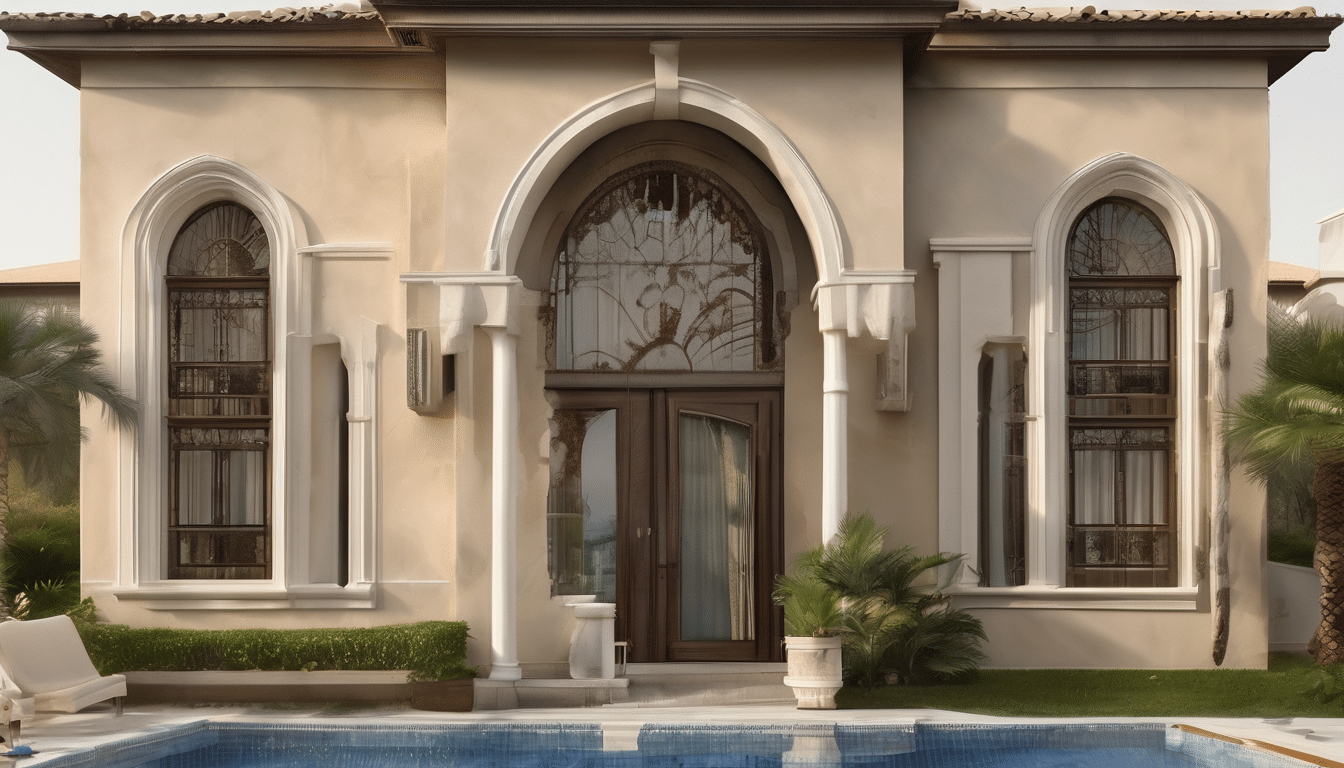
Mold In Dubai Villas: How Thermal Bridging Creates Hidden
In Dubai’s extreme climate, where outdoor temperatures exceed 45°C and humidity reaches 90%, villa owners face unseen dangers indoors. How Thermal Bridging creates hidden mold in Dubai villas stems from constant air conditioning chilling building elements, leading to condensation in concealed areas. This issue affects nearly 60% of mold-positive residences, as revealed in Saniservice’s two-year study, often without visible signs but with serious health implications.
Thermal bridges occur where highly conductive materials like concrete slabs or steel frames bypass insulation, dropping surface temperatures below the dew point. In air-conditioned spaces at 18-22°C, these spots hit 12-15°C, condensing humid air and enabling mold at over 70% relative humidity. This supporting article to the Architectural Design and Indoor Health Integration Remediation Success: Before and After Analysis case study delves into mechanisms, hotspots, and fixes specific to UAE villas.
Table of Contents
- Understanding Thermal Bridging in Dubai Villas
- 6 Mechanisms: How Thermal Bridging Creates Hidden Mold in Dubai Villas
- Dubai Climate: Why It Worsens Thermal Bridging and Mold
- Common Hotspots in Villas
- Health Risks from Hidden Mold
- Detection Using Advanced Tools
- Proven Prevention and Remediation Solutions
- Link to Architectural Remediation Success
How Thermal Bridging Creates Hidden Mold In Dubai Villas – Understanding Thermal Bridging in Dubai Villas
Thermal bridging happens when a more conductive path allows heat to flow faster than through insulated areas, creating localised cold spots. In Dubai villas, concrete frames and slabs—common in Jumeirah or Arabian Ranches properties—conduct heat rapidly, chilling interior surfaces.
During AC operation, indoor air at 50-60% relative humidity contacts these cold surfaces, condensing moisture. Mold spores, ubiquitous in UAE dust, germinate above 80% relative humidity (RH) and 15°C for 48 hours. Equilibrium relative humidity in gypsum or MDF reaches 90%, fostering hidden growth.
Unlike temperate climates, Dubai’s diurnal swings—hot days to humid nights—reverse vapor drive, trapping moisture inward. This makes how thermal bridging creates hidden mold in Dubai villas a predictable architectural flaw.
6 Mechanisms: How Thermal Bridging Creates Hidden Mold in Dubai Villas
Saniservice inspections identify six primary ways thermal bridging drives concealed mold. Each exploits UAE construction norms and climate.
1. Wall-Floor Junctions at Skirting Boards
Concrete slabs meet walls without thermal breaks, chilling skirtings to 12-15°C. AC-cooled air pools here, condensing vapour. Data shows 24 times higher spore counts behind MDF skirtings.
2. Exterior Wall Corners
Reinforced corners conduct cold, dropping temperatures 5-8°C below ambient. Humid air from gaps condenses, hidden by paint or plaster.
3. Balcony Slab Penetrations
Balcony edges penetrating walls chill floors. In Jumeirah villas, this creates wall-floor mold traps.
4. HVAC Duct and Penetration Points
Cold ducts near exterior walls form bridges; leaky seals trap humidity in false ceilings.
5. Roof Parapets and Edge Beams
Parapets cool upper floors, causing attic mold in two-storey villas.
6. Chilled Pipe Runs
AC pipes sweating near walls amplify local condensation, feeding mold in cavities.
| Hotspot | % of Cases | Avg. Spore Elevation |
|---|---|---|
| Skirting Boards | 60% | 24x |
| Wall Corners | 40% | 15x |
| Balconies | 25% | 12x |
| HVAC Points | 20% | 10x |
| Roof Edges | 15% | 8x |
How Thermal Bridging Creates Hidden Mold In Dubai Villas – Dubai Climate: Why It Worsens Thermal Bridging and Mold
Dubai summers push 40-50°C with 60-90% humidity, while villas maintain 18-22°C indoors—a 25-30°C differential. Nighttime RH spikes to 95% drive vapour indoors via gaps.
Gulf winters add morning dew risks on chilled bridges. Continuous AC sustains conditions for weeks, unlike seasonal temperate mold. Energy codes favour insulation without breaks, trapping moisture.
This environment uniquely intensifies how thermal bridging creates hidden mold in Dubai villas, with mold thriving in unvented cavities.
Common Hotspots in Villas
Audits in Dubai, Sharjah, and Abu Dhabi pinpoint skirtings (60%), corners (40%), and bathrooms. Low-airflow bedrooms in Arabian Ranches suffer roof junctions.
Kitchens trap cooking vapours on bridged walls. Upstairs areas in villas amplify risks due to stack effect pulling humid air upward.
Health Risks from Hidden Mold
Hidden growth releases spores and mycotoxins, causing allergies, asthma, and oxidative stress. Families report coughs and headaches, often misdiagnosed.
Children and elderly face higher exposure; HVAC spreads contaminants villa-wide. Long-term respiratory risks rise in humid climates, with remediation costing AED 50,000+.
Detection Using Advanced Tools
Thermal imaging identifies cold anomalies at 0.5°C resolution, revealing dew points. Moisture meters probe cavities; borescopes inspect hidden areas. Air sampling confirms spore spikes.
Full villa scans cost AED 1,500-3,000, averting AED 20,000+ fixes. Combine with RH mapping for hygrothermal analysis.
| Tool | Accuracy | Cost (AED) | Use Case |
|---|---|---|---|
| Thermal Imaging | 0.5°C | 2,000 | Cold Spots |
| Moisture Meter | 1% RH | 500 | Cavity RH |
| Air Sampler | Spore/m³ | 1,000 | Confirmation |
Proven Prevention and Remediation Solutions
Install aerogel thermal breaks (AED 20-50/m) at junctions; insulate columns with foam. Seal penetrations; use PVC skirtings over MDF.
Breathable paints raise surfaces 3-5°C; HRV systems maintain 45-55% RH. Comply with DEWA standards; annual checks cost AED 500 vs. major repairs.
Link to Architectural Remediation Success
The Architectural Design and Indoor Health Integration Remediation Success: Before and After Analysis case study mirrors these issues. In a Jumeirah villa, 15°C skirting bridges caused 24x spore elevation and allergies. Fixes—breaks, ventilation—normalised air, resolving symptoms.
Such integrations highlight how thermal bridging creates hidden mold in Dubai villas, with before-after data proving efficacy.
Key Takeaways
- Thermal bridges chill surfaces to dew point, condensing moisture for hidden mold in 60% of cases.
- Dubai’s AC differentials and humidity spikes make skirtings and corners prime hotspots.
- Detect with imaging and meters; prevent with breaks and ventilation for AED 20-50/m.
- Health risks demand action—remediation saves AED 50,000+ long-term.
- Ties to architectural remediation success via root-cause fixes.
Conclusion
How thermal bridging creates hidden mold in Dubai villas is a science-backed crisis driven by climate and design. Understanding mechanisms, hotspots, and solutions empowers owners to protect health and property. Reference the linked Architectural Design and Indoor Health Integration Remediation Success: Before and After Analysis for real-world application. Act early with inspections to avoid invisible threats.

JV de Castro
JV de Castro is the Chief Technology Officer at Saniservice, where he leads innovation in indoor environmental sciences, IT infrastructure, and digital transformation. With over 20 years of experience spanning architecture, building science, technology management, digital media architecture, and consultancy, he has helped organizations optimize operations through smart solutions and forward-thinking strategies. JV holds a Degree in Architecture, a Masters of Research in Anthropology, an MBA in Digital Communication & Media, along with certifications in mold, building sciences and building technology. Passionate about combining technology, health, and sustainability, he continues to drive initiatives that bridge science, IT, and business impact.

Leave a Reply