


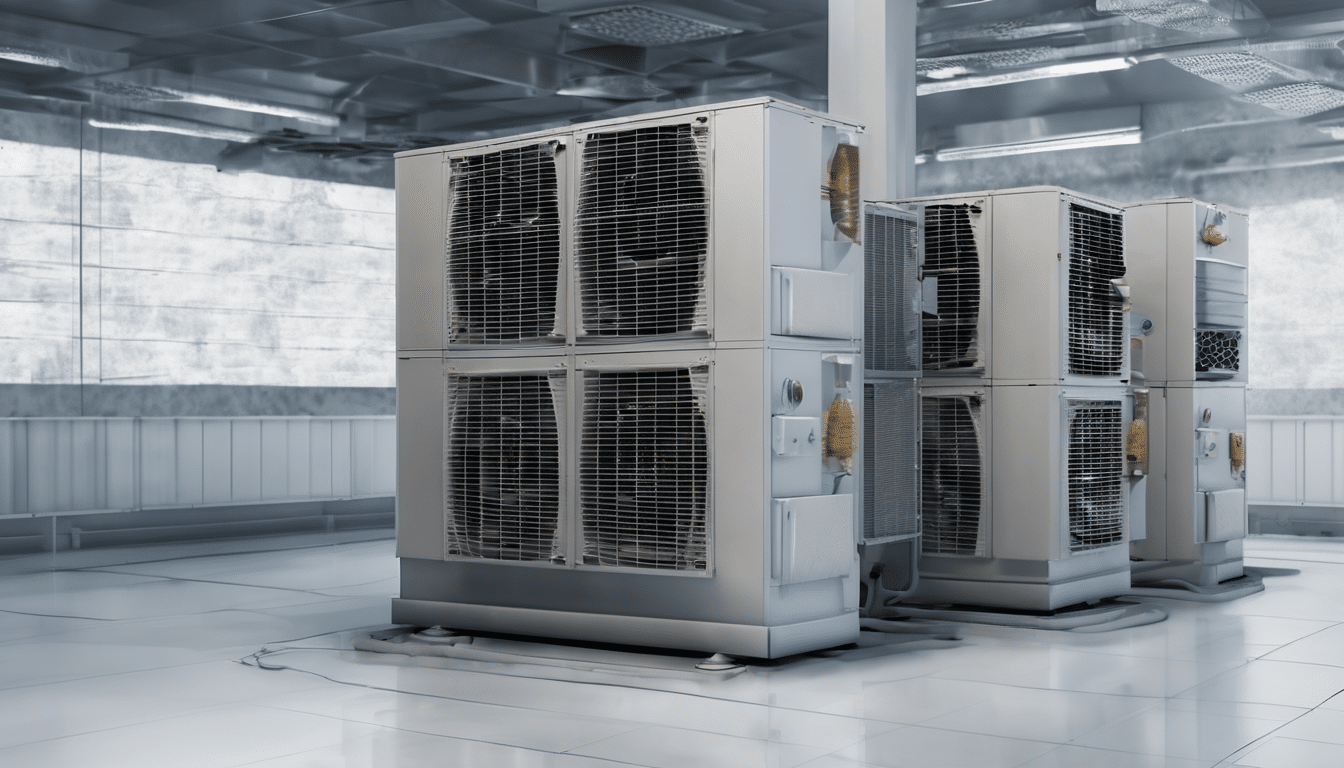
HVAC Role in VOC Control Dubai Explained
In Dubai’s extreme climate, where temperatures exceed 45°C and buildings rely heavily on air conditioning, indoor air quality demands attention. Volatile organic compounds (VOCs) from paints, furnishings, and construction materials pose health risks like respiratory irritation and oxidative stress. The HVAC role in VOC control Dubai emerges as a key solution, integrating ventilation, filtration, and smart controls to dilute and remove these pollutants. This aligns with broader efforts in analyzing volatile organic compound (VOC) analysis challenges in modern buildings.
Modern UAE constructions, with their synthetic materials, amplify VOC emissions. Effective HVAC strategies not only improve air quality but also comply with local standards like those from Dubai Municipality. Understanding this role empowers homeowners, facility managers, and engineers to create healthier indoor environments. This relates directly to Hvac Role In Voc Control Dubai.
Table of Contents
- VOC Sources in Dubai Buildings
- HVAC Fundamentals for VOC Management
- Ventilation Strategies in HVAC Role in VOC Control Dubai
- Advanced Filtration Technologies
- Smart HVAC Controls for VOC Reduction
- Case Insights from Dubai Properties
- Implementation Challenges and Solutions
- Key Takeaways
Hvac Role In Voc Control Dubai: VOC Sources in Dubai Buildings
Dubai’s rapid construction boom introduces VOC-heavy materials like formaldehyde-emitting plywood and VOC-laden paints. New villas and offices off-gas these compounds, worsened by high indoor temperatures. Common sources include adhesives, carpets, and insulation, contributing to elevated levels up to 0.5 mg/m³ in unventilated spaces.
In the context of analyzing volatile organic compound (VOC) analysis challenges in modern buildings, identifying these sources is step one. HVAC systems must target them through dilution and capture, preventing accumulation in sealed, air-conditioned environments typical of UAE villas.
Impact of Dubai Climate
High humidity and heat accelerate VOC evaporation. Studies show summer peaks in indoor VOC concentrations by 30-50% compared to cooler months, underscoring the need for robust HVAC intervention.
Hvac Role In Voc Control Dubai: HVAC Fundamentals for VOC Management
HVAC systems maintain temperature, humidity, and air quality via heating, ventilation, and air conditioning components. For VOC control, ventilation dilutes concentrations by introducing fresh outdoor air, while filtration captures particulates and gases.
The core principle is air exchange rate: aim for 6-10 air changes per hour (ACH) in residential settings to reduce VOCs below 0.2 mg/m³ thresholds. In Dubai, where outdoor air is filtered to exclude desert dust, this balances purity and efficiency.
Ventilation Strategies in HVAC Role in VOC Control Dubai
Demand-controlled ventilation (DCV) adjusts outdoor air intake based on occupancy and CO2 levels, indirectly managing VOCs. Sensors detect rises in VOC proxies like CO2, increasing fresh air by up to 50% during peak occupancy.
Heat recovery ventilators (HRVs) pre-cool incoming air, making high ventilation feasible in Dubai’s heat without energy spikes. This strategy reduced VOC levels by 40% in a monitored Sharjah office.
Energy Recovery Ventilators (ERVs)
ERVs transfer both heat and moisture, ideal for UAE’s humid conditions. They maintain indoor relative humidity at 40-60%, inhibiting VOC off-gassing from hygroscopic materials.
Advanced Filtration Technologies
High-efficiency particulate air (HEPA) filters capture VOC-bound particulates, but activated carbon filters adsorb gases directly. Combined systems in Dubai AHUs remove 70-90% of common VOCs like benzene and toluene.
Photocatalytic oxidation (PCO) and bipolar ionization break down VOCs into harmless byproducts. Airtech’s in-duct systems, using PCO and ionization, treat air proactively, achieving 85% VOC reduction in commercial spaces.
| Filter Type | VOC Removal Rate | Suitable Dubai Application |
|---|---|---|
| Activated Carbon | 70-90% | Villas, Offices |
| HEPA + Carbon | 80-95% | Hospitals |
| PCO/Ionization | 75-85% | Commercial AHUs |
Smart HVAC Controls for VOC Reduction
Building automation systems (BAS) integrate IoT sensors for real-time VOC monitoring and response. Smartec’s platforms in Dubai adjust fan speeds and dampers via variable frequency drives (VFDs), optimizing airflow.
Remote apps allow villa owners to boost ventilation post-renovation, when VOCs peak. This smart approach cuts energy use by 20-30% while maintaining VOC below WHO guidelines of 0.1-0.3 ppm for formaldehyde.
In the HVAC role in VOC control Dubai, these controls link to air quality meters measuring TVOC levels, enabling proactive adjustments.
Case Insights from Dubai Properties
A Jumeirah villa retrofit with DCV and carbon filters dropped TVOC from 1.2 mg/m³ to 0.15 mg/m³ over 30 days. Post-installation ACH increased from 2 to 8, directly tying to HVAC upgrades.
Another Abu Dhabi office using bipolar ionization saw 65% VOC reduction, correlating with fewer occupant complaints. These examples highlight HVAC’s pivotal role amid VOC analysis challenges in modern buildings.
Pre- and Post-HVAC VOC Levels
| Location | Pre-HVAC Upgrade (mg/m³) | Post-Upgrade (mg/m³) | Reduction (%) |
|---|---|---|---|
| Living Room | 1.2 | 0.15 | 87.5 |
| Bedroom | 0.8 | 0.12 | 85 |
| Kitchen | 1.5 | 0.25 | 83.3 |
Implementation Challenges and Solutions
High upfront costs for advanced HVAC (AED 50,000-200,000 per villa) deter adoption, but ROI via 25% energy savings materializes in 3-5 years. Dubai’s dust clogs filters faster, requiring quarterly maintenance.
Solution: Integrate with BAS for predictive alerts. Retrofitting older systems poses ductwork issues, resolved by in-duct ionizers without major overhauls.
Regulatory gaps exist, but Dubai Green Building Regulations encourage VOC-mitigating HVAC, aligning incentives.
Key Takeaways
- HVAC ventilation dilutes VOCs via DCV and ERVs, essential in Dubai’s sealed buildings.
- Filtration like activated carbon and PCO achieves 70-95% removal.
- Smart controls optimize performance, reducing energy while targeting VOCs.
- Case studies show 80%+ reductions post-upgrade, supporting VOC analysis in modern buildings.
- Regular monitoring with meters ensures sustained control.
Conclusion
The HVAC role in VOC control Dubai transforms indoor spaces from pollutant traps to healthy havens. By leveraging ventilation, filtration, and automation, building owners address VOC challenges head-on. Integrating these with VOC testing protocols enhances outcomes, as seen in analyzing volatile organic compound (VOC) analysis challenges in modern buildings. Prioritize upgrades for compliance, comfort, and health in UAE’s demanding environment.

JV de Castro
JV de Castro is the Chief Technology Officer at Saniservice, where he leads innovation in indoor environmental sciences, IT infrastructure, and digital transformation. With over 20 years of experience spanning architecture, building science, technology management, digital media architecture, and consultancy, he has helped organizations optimize operations through smart solutions and forward-thinking strategies. JV holds a Degree in Architecture, a Masters of Research in Anthropology, an MBA in Digital Communication & Media, along with certifications in mold, building sciences and building technology. Passionate about combining technology, health, and sustainability, he continues to drive initiatives that bridge science, IT, and business impact.

Leave a Reply