


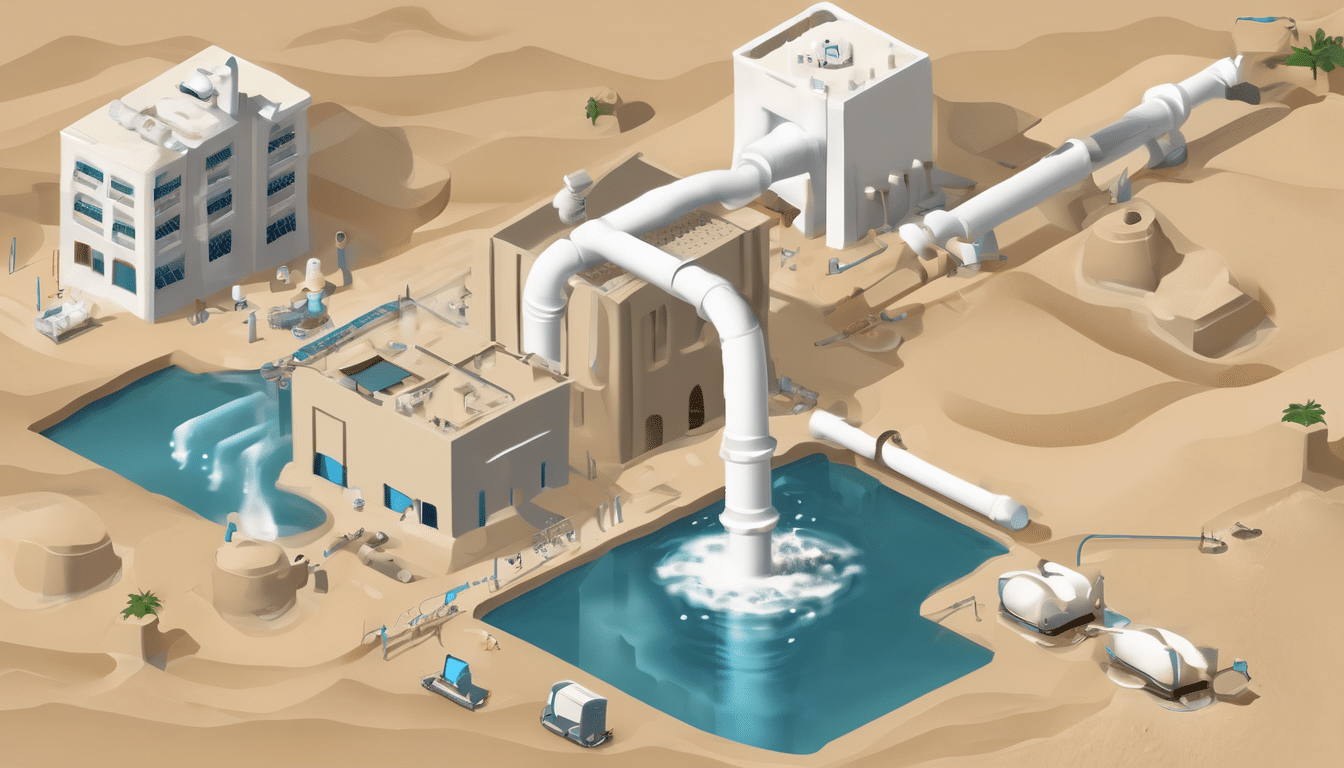
Effective Water Filtration for UAE Conditions
In the United Arab Emirates, where desalination provides over 90% of drinking water, ensuring purity is paramount. High salinity, chlorine residuals, and microbial risks from storage tanks demand robust solutions. Effective Water Filtration for UAE conditions addresses these challenges, protecting health in villas across Dubai, Abu Dhabi, and Sharjah.
This supporting article to the Water Quality Testing and Analysis Optimization Study: A Real-World Example explores filtration strategies tailored to local water sources. Desalinated water often carries total dissolved solids (TDS) up to 1,000 mg/L and potential bacteria like E. coli, as seen in recent Dubai villa cases. Proper filtration enhances safety and taste, reducing reliance on bottled water.
With rising awareness, UAE households increasingly adopt advanced systems. Government initiatives, like DEWA’s smart water grids, promote sustainable purification. Understanding local contaminants guides selection for optimal performance.
Table of Contents
- UAE Water Challenges and Contaminants
- Key Filtration Technologies for UAE Homes
- Reverse Osmosis: Ideal for High TDS in UAE Conditions
- UV and Activated Carbon in UAE Filtration
- Point-of-Use vs Point-of-Entry Systems
- Selecting Effective Water Filtration for UAE Conditions
- Maintenance for Long-Term Efficacy
- Link to Water Quality Testing Study
Effective Water Filtration For Uae Conditions – UAE Water Challenges and Contaminants
Desalination via reverse osmosis plants meets UAE demand but introduces issues. Water from Dubai and Abu Dhabi sources often exceeds 500 mg/L TDS, with chlorination adding residuals up to 1 mg/L. Storage tanks in villas foster biofilm, harbouring bacteria.
Common contaminants include sediments, heavy metals like lead (up to 0.01 mg/L), and pathogens. In humid UAE conditions, tanks develop E. coli risks, as noted in Dubai Municipality reports. High temperatures accelerate microbial growth, necessitating targeted filtration.
Pharmaceutical traces and pesticides from municipal supplies compound risks. Regular testing reveals these, aligning with the Water Quality Testing and Analysis Optimization Study: A Real-World Example, where pre-filtration samples showed elevated coliforms.
| Contaminant | Typical UAE Level | WHO Guideline (mg/L) |
|---|---|---|
| TDS | 500-1,000 | <600 |
| Chlorine | 0.5-1.0 | <5 |
| E. coli (CFU/100mL) | Up to 10 | 0 |
| Lead | 0.001-0.01 | 0.01 |
Effective Water Filtration For Uae Conditions – Key Filtration Technologies for UAE Homes
Effective water filtration for UAE conditions combines multiple stages. Sediment pre-filters remove particles over 5 microns, protecting downstream components. Carbon blocks target chlorine and VOCs, improving taste.
Advanced options like UV disinfection inactivate 99.99% of bacteria without chemicals. Membrane technologies excel against dissolved solids. UAE market growth, valued at USD 287 million in 2023, reflects demand for these hybrids.
Systems from providers like MEA Water integrate IoT for monitoring TDS and flow, suiting villa needs in Jumeirah or Al Barsha.
Sediment and Pre-Filtration Stages
These capture rust and sand common in UAE pipes, extending filter life by 50%. Polypropylene cartridges rated at 1-5 microns are standard.
Reverse Osmosis: Ideal for High TDS in UAE Conditions
Reverse osmosis (RO) systems force water through 0.0001-micron membranes, rejecting 95-99% TDS. Perfect for desalinated water exceeding 800 mg/L, they produce 600 GPD in compact Dubai models.
AquaPro’s tankless RO units minimise wastewater (drain ratio under 1:1), addressing UAE sustainability goals. Post-RO mineralisation prevents acidic water (pH <7).
In Sharjah villas, RO reduced TDS from 950 to 50 mg/L, verified by lab tests. Maintenance involves quarterly membrane checks, costing AED 200-500 annually.
| Parameter | Pre-RO | Post-RO | Reduction (%) |
|---|---|---|---|
| TDS (mg/L) | 900 | 40 | 96 |
| Hardness (mg/L) | 300 | 10 | 97 |
| Bacteria (CFU/mL) | 5 | 0 | 100 |
UV and Activated Carbon in UAE Filtration
Activated carbon adsorbs chlorine (up to 1 mg/L) and odours, using granular media with 1,000 m²/g surface area. UAE systems replace cartridges every 6 months for efficacy.
UV lamps at 254 nm deliver 40 mJ/cm² dosage, eliminating viruses and bacteria. Ideal post-RO or for tanks, they require annual bulb replacement (AED 150).
Combined UV-carbon units in Abu Dhabi homes neutralised 100% coliforms, enhancing post-tank cleaning results.
Point-of-Use vs Point-of-Entry Systems
Point-of-Use (POU) filters kitchen taps, costing AED 1,000-3,000. Compact for Dubai apartments, they target drinking water.
Point-of-Entry (POE) whole-house systems (AED 5,000-15,000) treat all outlets, preventing scale in showers. Essential for villas with 500+ m² areas.
POE suits high-hardness water (200-400 mg/L), reducing limescale by 90%.
Selecting Effective Water Filtration for UAE Conditions
Start with water quality testing (AED 500-1,000), analysing TDS, pH, and microbes. Match to contaminants: RO for TDS, UV for biology.
Consider flow rate (litres/min) and certifications (NSF/ANSI 58). UAE climate demands corrosion-resistant housings.
Budget: Entry-level AED 800, premium AED 20,000. ROI via bottled water savings (AED 2,000/year/family).
Maintenance for Long-Term Efficacy
Monthly pre-filter checks prevent clogs. Annual professional servicing (AED 300) ensures 99% efficiency. Monitor TDS with handheld metres (AED 100).
In humid UAE summers, inspect for algae in tanks pre-filtration. Post-maintenance testing verifies performance, as in the optimization study.
Link to Water Quality Testing Study
The Water Quality Testing and Analysis Optimization Study: A Real-World Example demonstrated filtration post-tank cleaning reduced E. coli to zero. Such data underscores effective water filtration for UAE conditions in preventing recurrence.
Key Takeaways
- RO excels for high TDS desalinated water, achieving 96% reduction.
- Combine UV and carbon for comprehensive microbial and chemical control.
- Test water first; select POE for villas, POU for apartments.
- Regular maintenance ensures longevity and safety.
- Aligns with UAE sustainability goals, saving AED thousands annually.
Conclusion
Effective water filtration for UAE conditions transforms desalinated supplies into safe, palatable water. By addressing salinity, microbes, and sediments, systems like RO and UV safeguard health in Dubai and beyond. Integrate testing and maintenance for optimal results, as evidenced in real-world studies. Invest today for cleaner tomorrow.

JV de Castro
JV de Castro is the Chief Technology Officer at Saniservice, where he leads innovation in indoor environmental sciences, IT infrastructure, and digital transformation. With over 20 years of experience spanning architecture, building science, technology management, digital media architecture, and consultancy, he has helped organizations optimize operations through smart solutions and forward-thinking strategies. JV holds a Degree in Architecture, a Masters of Research in Anthropology, an MBA in Digital Communication & Media, along with certifications in mold, building sciences and building technology. Passionate about combining technology, health, and sustainability, he continues to drive initiatives that bridge science, IT, and business impact.

Leave a Reply