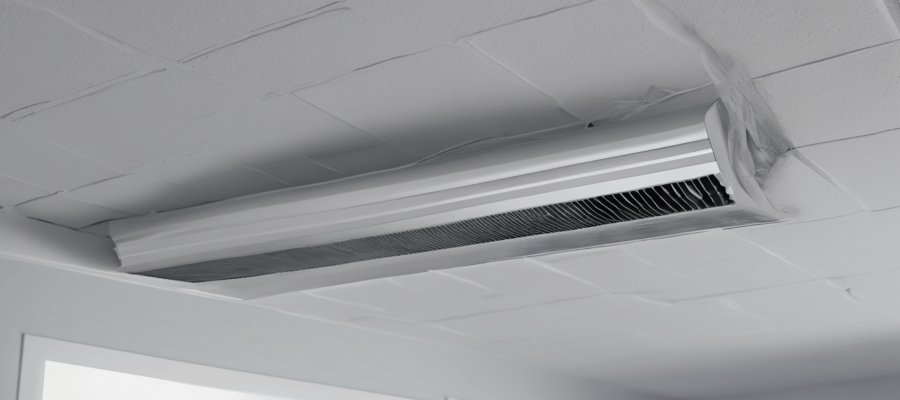
What Happens During a professional AC duct cleaning is a question that deserves a precise answer, not a vague promise. In Dubai’s climate, where air conditioning runs for ten or more months of the year, duct systems accumulate layers of fine desert dust, biological residue, and microbial matter at a rate that genuinely surprises most homeowners when they see it up close. A thorough professional service follows a documented, multi-stage protocol — from pre-inspection to post-treatment verification — and every stage has a purpose that connects directly to the quality of the air you breathe indoors.
This article walks through the full process as carried out by a NADCA-certified provider, explaining what each stage accomplishes and what to expect from start to finish. It is written to help property owners in Dubai villas, apartments, and commercial spaces understand the difference between a methodical service and a superficial one.
Why the Process Matters More Than the Price
In the UAE market, AC duct cleaning is often sold on price rather than process. That framing is worth questioning. The physical conditions inside a UAE duct system — fine silica dust from desert air, elevated humidity in coastal areas, extended run hours — create contamination profiles that require systematic removal, not a quick vacuum and spray.
A properly executed service addresses the full interior surface of the ductwork, the supply and return grilles, the blower fan, the drain pan, and the evaporator coil. Skipping any of these components means the contamination is redistributed rather than removed. NADCA methodology — the standard used by certified providers — defines minimum scope requirements precisely to prevent this.
Stage One: Pre-Service Inspection
Every professional duct cleaning engagement begins with an inspection before any tools are deployed. Saniservice specialists, for example, assess the duct system layout, material type, access point locations, and visible contamination levels before quoting or scheduling the work. This pre-inspection determines which tools are appropriate, whether any sections require access panel creation, and whether there are co-existing issues — such as a water leak near the air handler or signs of mould on duct surfaces — that need to be addressed before cleaning proceeds.
Skipping this step is a consistent marker of providers who are working to a fixed-price checklist rather than to the actual condition of the property. In Dubai villas with extended ductwork runs and multiple fan coil units, a proper pre-inspection is not optional — it shapes everything that follows.
Stage Two: System Isolation and Protection
Before mechanical work begins, the duct system is placed under negative pressure where the configuration allows. This means attaching high-powered vacuum equipment — typically truck-mounted or large portable units — to the main duct trunk or return plenum. The negative pressure keeps dislodged particles moving toward the collection equipment rather than back into the occupied space.
Supply registers are blocked at their grilles to concentrate suction at the active work zone. Furniture, flooring, and adjacent surfaces in the work area are protected. These preparation steps are standard practice in NADCA-aligned methodology and take roughly 20 to 40 minutes depending on system size. They are not optional extras — they are what separates a professional duct cleaning from a shop-vac operation.
Stage Three: Mechanical Agitation and Debris Removal
This is the core physical stage of the service. Technicians use a combination of rotating brush systems, compressed air tools (pneumatic agitators or air whips), and vacuum extraction to dislodge and remove accumulated debris from duct wall surfaces. The tools are inserted through each access point and driven through the duct run systematically.
What is being removed at this stage
In a Dubai residential property that has not had its ducts serviced in two or more years, the material collected at this stage commonly includes compacted fine dust, fibrous particles, construction debris (in post-handover properties), and biological material including skin cells and mould fragments. The quantities are frequently significant — not trace amounts. Field experience across thousands of UAE properties consistently shows that duct systems in this climate accumulate faster than homeowners expect.
Access panel creation when needed
Older duct systems in Dubai — particularly in villas built prior to 2010 — may lack adequate access points for mechanical tools. In these cases, technicians create temporary access panels at calculated intervals. These panels are sealed after cleaning with approved materials. The property owner is always informed before any panel is created, and the work is documented.
Stage Four: Component Cleaning
The duct interior is only part of the system. A complete service includes cleaning of every component that either conditions or distributes the air.
Evaporator coil cleaning
The evaporator coil sits at the heart of the fan coil unit. Dust accumulation on coil fins reduces heat transfer efficiency and creates a surface where moisture and organic matter combine — conditions that commonly precede biological growth. Coil cleaning uses foaming agents or pressurised water, depending on coil type and access configuration, followed by thorough rinse and drying.
Blower fan and drain pan
The blower wheel is another high-accumulation zone. Imbalance from debris build-up causes noise and reduces airflow. Drain pans collect condensate and, when not regularly cleaned, become a reservoir for stagnant water and microbial development. Both components are cleaned and inspected as standard in a thorough service.
Supply and return grilles
Grilles are removed, cleaned off-unit, and inspected for damage or blockage before reinstallation. Blocked or deformed grilles affect air distribution across the room and can create pressure imbalances in the duct system.


Stage Five: Disinfection
Mechanical cleaning removes physical debris. Disinfection addresses biological residue. These are two distinct steps, and a service that performs only one of them is incomplete.
After the duct interior has been mechanically cleaned and verified, a bio-sanitiser approved by Dubai Municipality is applied. Saniservice uses an electrostatic application method for this stage, which deposits the active agent on surfaces uniformly and with minimal chemical volume — consistent with the minimum-effective-chemical philosophy that guides all Saniservice protocols. The disinfectant chemistry used is disclosed to the client, including the active compound and the applied concentration.
The choice of disinfectant matters. A provider applying a broad-spectrum biocide at maximum concentration, without mechanical pre-cleaning, is not performing a thorough service. The disinfectant must reach a surface that has already been physically prepared for it to be effective.
Stage Six: Post-Cleaning Verification
A professional service concludes with verification, not just completion. This typically includes a visual inspection of accessible duct sections using a camera or borescope, a check of airflow at all supply registers, confirmation that drain pan discharge is clear, and a written service report.
The service report should document what was found during pre-inspection, what was removed, which components were treated, which chemistry was applied and at what concentration, and whether any follow-up items were identified. This documentation is what allows a facility manager or property owner to track the system’s condition over time and make informed decisions about maintenance intervals.
What a Thorough Service Should Include
Based on field experience across Dubai villas, apartment towers, hotel guest rooms, school buildings, and commercial properties, a complete professional duct cleaning service covers the following as standard:
- Pre-service inspection and system assessment
- Negative pressure setup and surface protection
- Mechanical agitation and vacuum extraction of all accessible duct runs
- Evaporator coil, blower fan, and drain pan cleaning
- Supply and return grille removal and cleaning
- Application of a Dubai Municipality-approved bio-sanitiser
- Post-cleaning camera or borescope inspection
- Written service documentation
Any service that omits multiple items from this list warrants a conversation with the provider before work begins. Scope determines outcome, and outcome is the only metric that matters.
Key Takeaways for Dubai Property Owners
Understanding what happens during a professional AC duct cleaning gives you a useful benchmark when evaluating providers. These are the points worth carrying forward:
- Mechanical removal and disinfection are separate stages — a service that conflates them is cutting scope.
- Negative pressure setup is the difference between removing contamination and redistributing it.
- Coil, blower, and drain pan cleaning are part of the service, not upsells.
- NADCA certification provides a defined minimum standard — ask whether the provider holds it.
- A written service report is not optional. It is the evidence that the work was done correctly.
- In Dubai’s climate, inspection-to-service intervals of 12 to 18 months are commonly recommended for residential systems running year-round.
The right question to ask a provider is not “how long will it take?” but “what does your documented protocol include?” The answer to that question will tell you more than the price ever will.
Frequently Asked Questions
How long does a professional AC duct cleaning take in Dubai?
For a typical Dubai villa with two to three fan coil units, a thorough professional duct cleaning takes between three and six hours. Larger properties, those with extended ductwork, or systems with significant contamination levels may require more time. A pre-inspection gives the most accurate estimate for your specific property.
Is disinfection always included in an AC duct cleaning service?
It should be, but it is not always guaranteed. Mechanical cleaning removes physical debris; disinfection addresses biological residue on duct surfaces. A complete service includes both. Confirm with your provider that a Dubai Municipality-approved bio-sanitiser is applied as a documented step, not as an optional add-on.
What Happens During a Professional AC Duct Cleaning when mould is found?
If mould is identified during the duct inspection, the scope of work expands. Surface mould within accessible duct sections may be addressed during a thorough cleaning and disinfection cycle. However, confirmed mould growth — particularly where structural penetration is suspected — requires a dedicated mould remediation assessment before duct cleaning proceeds. Remediation and cleaning are related but distinct services.
How do I know if an AC duct cleaning company in Dubai is certified?
Ask specifically whether the company holds NADCA certification and whether the technicians performing the work are trained under that standard. ISIAQ credentials provide additional technical depth for air hygiene work. Dubai Municipality certification applies to disinfection services. Verify that the company can show documentation, not just claim it verbally.
Does professional duct cleaning actually improve air quality?
Field evidence consistently shows that a properly executed duct cleaning — covering mechanical removal, coil cleaning, and disinfection — reduces the particulate and biological load circulated by the HVAC system. The most measurable outcomes are reduced dust redeposition on surfaces, improved airflow at registers, and, where Indoor Sciences laboratory testing is applied, documented reductions in airborne microbial counts after service.
How often should AC ducts be cleaned in Dubai apartments and villas?
For residential properties in Dubai running air conditioning year-round, a professional duct cleaning every 12 to 18 months is a commonly recommended interval. Properties near construction sites, coastal areas with higher humidity, or buildings with known water intrusion history may warrant more frequent service. A professional assessment of your specific system provides the most accurate recommendation.
Can AC duct cleaning be done while the property is occupied?
Yes. Professional duct cleaning is routinely carried out in occupied Dubai apartments and villas. Negative pressure setup during the mechanical stage minimises the escape of dislodged particles into the living space. After disinfection, ventilation of the treated areas is recommended for 30 to 60 minutes before normal occupation resumes. Your service provider should advise on preparation steps specific to your property layout. Understanding What Happens During a Professional AC Duct Cleaning is key to success in this area.