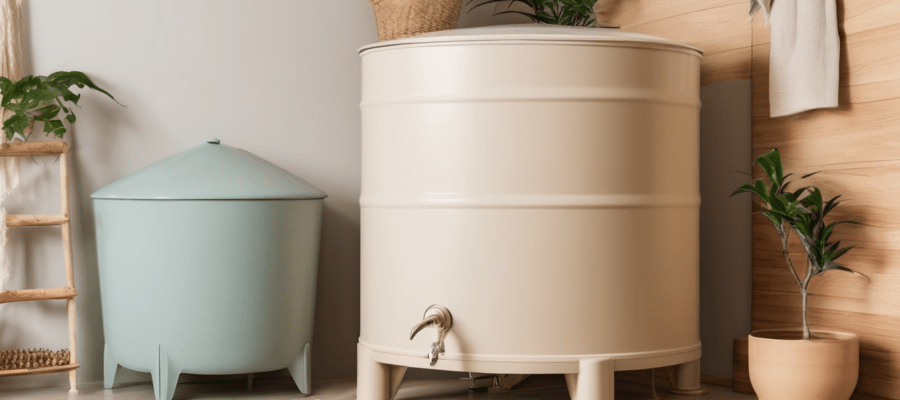
Most Dubai households do not think about their water tank until something goes visibly wrong. That is the challenge. In a climate where ambient temperatures regularly exceed 40°C and rooftop tanks absorb direct solar heat for months at a stretch, the conditions inside an uncleaned tank can deteriorate well before any obvious warning surfaces. Knowing the Signs Your Water tank needs cleaning now is not about anxiety — it is about informed property management.
The signs your water tank needs cleaning now range from things you can see and smell immediately, to subtler indicators that only become apparent over weeks. Some appear in the water itself. Others show up in how your plumbing behaves, how your skin feels after a shower, or how your appliances perform. Understanding each one gives you the knowledge to act before water quality becomes a measurable concern.
This guide covers the full picture: what causes tanks to deteriorate, how to recognise the warning signs, what a professional inspection involves, and how Dubai’s building environment specifically accelerates the need for regular intervention.
Why Water Tanks in Dubai Deteriorate Faster Than You Might Expect
Dubai’s climate places unusual demands on domestic water storage. Rooftop tanks — common across villas, townhouses, and low-rise buildings — sit exposed to surface temperatures that can climb well above 50°C during summer months. At these temperatures, the thermal barrier between outdoor heat and stored water weakens, and the tank’s interior becomes a warmer environment where microbial activity can accelerate.
Coastal humidity, mineral-rich mains supply water, and sediment that enters through supply lines all contribute to the accumulation of deposits on tank walls and floors. Over time, this creates the conditions where biofilm can establish itself — a thin, structured layer of microorganisms that adheres to surfaces and is significantly harder to remove than free-floating contamination.
This is why Dubai Municipality regulations require periodic water tank cleaning and disinfection. The environment itself makes it a necessity, not a recommendation.
Signs Your Water Tank Needs Cleaning Now — The Visual Indicators
The most immediate signs your water tank needs cleaning now are often visible, either in the water or on the tank itself. A professional inspection will always begin here.
Discolouration in Tap Water
Water that appears yellowish, brownish, or cloudy when drawn from the tap is one of the clearest signs your water tank needs cleaning now. This discolouration typically indicates suspended sediment, rust from internal fittings, or the early stages of algal or microbial growth within the tank. It is not always consistent — the water may appear clear first thing in the morning and discoloured after the tank has settled or been disturbed.
Visible Sediment or Particles
When filling a clear glass, fine particles that settle at the bottom point directly to tank floor accumulation. This sediment is commonly a mixture of mineral deposits, scale from hard water, airborne particulates that entered through inadequately sealed access points, and organic matter. Once sediment layers build, they create a surface ideal for further biological activity.
Algae or Slime on Tank Surfaces
Where tanks receive any exposure to light — through cracks, ill-fitting covers, or translucent panels — algal growth can establish. Algae appears as green, black, or brownish discolouration on tank walls and is one of the clear signs your water tank needs cleaning now. Even tanks in fully enclosed spaces are not immune, as biofilm growth does not require light.
Signs Your Water Tank Needs Cleaning Now — Odour and Taste Changes
Changes in the way your water smells or tastes are among the most reliable signs your water tank needs cleaning now, even when the water appears visually clear.
Musty or Earthy Smell
A musty smell in running water often indicates biofilm development or the early stages of microbial contamination within the tank. This odour is produced by metabolic by-products of bacteria and other microorganisms. It may be faint at first, more noticeable when water is warm, or detectable primarily in the bathroom rather than the kitchen.
Chlorine Odour That Seems Stronger Than Usual
This one is counterintuitive. When water has a stronger chlorine smell than normal, it can indicate that the residual chlorine in the supply water is reacting with organic matter accumulated in the tank. Higher reaction rates can point to a tank interior that has accumulated enough biological load to consume disinfectant more rapidly than expected.
Flat or Unpleasant Taste
Water that tastes flat, metallic, or otherwise off is worth taking seriously. Tank water that sits warm and stagnant loses its normal taste profile and may carry the chemical signature of internal surface degradation or microbial metabolites. If filtered drinking water tastes noticeably different from your unfiltered tap supply, the tank is a logical place to investigate.
Signs Your Water Tank Needs Cleaning Now — Physical and Plumbing Indicators
Not all signs your water tank needs cleaning now originate with the water itself. Several indicators appear in how your plumbing system and home appliances perform over time.
Scale and Limescale Buildup in Fixtures
Accelerated limescale accumulation on taps, showerheads, and appliance elements can indicate that sediment from the tank is entering the supply line. Dubai’s municipal water is moderately hard, and scale deposits are expected — but when the rate increases noticeably, the tank’s internal deposit load is often a contributing factor.
Reduced Water Pressure
Sediment and scale can accumulate in supply lines connected to the tank, gradually restricting flow. If pressure at multiple outlets has dropped without an obvious supply-side cause, a professional tank inspection is warranted. This is particularly common in older villa installations where tank fittings have not been replaced in several years.
Frequent Waterborne Illness or Gastrointestinal Symptoms Among Occupants
Repeated unexplained gastrointestinal complaints — particularly among children or elderly residents — that correlate with home water use are a serious indicator that water quality needs immediate professional assessment. Microbiological contamination of domestic water tanks is an established cause of waterborne illness. This warrants not just cleaning but a full water quality test conducted by an accredited laboratory.


Signs Your Water Tank Needs Cleaning Now — Dubai-Specific Risk Factors
Beyond the universal indicators, several conditions specific to Dubai’s building stock and climate accelerate the timeline at which the signs your water tank needs cleaning now become relevant.
Tanks Exposed to Direct Sunlight
Rooftop plastic or fibreglass tanks that are not shaded or insulated experience extreme temperature cycling. Heat causes tanks to expand and contract, which over time can cause microfissures that allow airborne contamination to enter. Thermal stress also degrades tank linings, releasing particles into the stored water.
Extended Summer Vacancy
Villas and apartments left unoccupied during summer months — a common pattern in Dubai — allow water to sit stagnant in the tank at elevated temperatures for extended periods. Stagnation significantly increases the risk of biofilm development and depletes residual chlorine, removing the last line of chemical protection. Returning to a property after a prolonged absence is a clear trigger to check for the signs your water tank needs cleaning now.
Post-Construction or Renovation Periods
Construction activity introduces significant airborne dust and particulate matter into the surrounding environment. If work has taken place on or near the building — including internal renovation — tank contamination risk rises. Dust ingress through improperly sealed access covers is a common finding during post-construction professional inspections.
What a Professional Water Tank Inspection Involves
Recognising the signs your water tank needs cleaning now is the first step. The next is understanding what a professional assessment entails, so you know what to expect and what standards to hold a service provider to.
A qualified technician will conduct a visual inspection of the tank interior, check the condition of the cover seal and inlet/outlet fittings, assess sediment depth and surface condition, and evaluate any visible biological growth. Where water quality concerns are more serious, a water sample may be collected for laboratory microbiological analysis — testing for parameters including total coliform bacteria, E. coli, heterotrophic plate count, and physical indicators such as turbidity and pH.
The cleaning process itself involves draining the tank, removing accumulated sediment manually, scrubbing all surfaces, and applying an appropriate disinfectant — typically a chlorine-based solution dosed to Dubai Municipality standards — before refilling and flushing. Documentation of the completed service, including pre- and post-cleaning condition, should be provided as standard.
How Often Should Dubai Residents Clean Their Water Tanks
Dubai Municipality guidelines recommend Water Tank Cleaning at a minimum frequency of every six months. However, field experience across villas, apartments, and townhouses across Dubai, Sharjah, Ajman, and Ras Al Khaimah consistently shows that properties with rooftop tanks, higher occupancy, or known contamination history benefit from more frequent inspection — often quarterly.
The signs your water tank needs cleaning now do not always wait for a six-month interval. Properties returning from summer vacancy, post-renovation homes, or buildings with ageing tank fittings may require assessment outside the standard cycle. Proactive inspection is always less costly — in practical and wellbeing terms — than responding to a problem after it has become apparent to occupants.
Expert Tips for Dubai Homeowners and Property Managers
- Schedule tank inspections to coincide with the transition out of summer — September and October are the most critical months given sustained heat exposure during June, July, and August.
- Ensure your tank access cover is sealed correctly after every inspection. Improperly re-seated covers are among the most common causes of post-service recontamination.
- Do not rely solely on visual water assessment. Clear water is not necessarily clean water — microbiological contamination is often invisible.
- Request a service report with photographic documentation from any professional cleaning provider. This record is essential for compliance with Dubai Municipality requirements and supports property management accountability.
- If your property has a rooftop tank, check whether it has UV-protective cladding or insulation. Bare tanks degrade faster and accumulate internal deposits more rapidly.
- For large villas or buildings with multiple tanks, consider staggered inspection schedules rather than cleaning all tanks simultaneously. This avoids supply disruption and allows for independent condition comparison.
Frequently Asked Questions
How do I know if the signs your water tank needs cleaning now apply to my apartment in Dubai?
Apartment residents in Dubai share building water tanks managed by the landlord or building operator. If you notice discoloured water, unusual odour, or taste changes, report them immediately to building management and request documentation of the last professional tank cleaning. Dubai Municipality regulations place the responsibility for tank maintenance on building owners and operators.
What are the most urgent signs your water tank needs cleaning now that I should never ignore?
The most urgent indicators are visible sediment in drawn water, a persistent musty or sulphuric smell, any gastrointestinal symptoms among household members that correlate with water use, and water that appears visibly discoloured. These warrant immediate professional assessment rather than a scheduled inspection at the next routine interval.
Can I clean my water tank myself, or do I need a professional?
Dubai Municipality regulations require Water Tank Cleaning and disinfection to be carried out by approved and registered service providers. DIY cleaning is not compliant and may also be ineffective without proper equipment, correct disinfectant dosing, and access to appropriate personal protective equipment. Professional service also provides documented proof of compliance, which is required for regulatory purposes.
How long does a professional water tank cleaning take in Dubai?
Scope and duration depend on tank size, the degree of sediment accumulation, and access conditions. A standard residential tank cleaning typically takes between two and four hours. Larger tanks in villas or commercial buildings with multiple storage units will require longer. A professional Saniservice assessment will confirm the timeline before work begins based on property-specific conditions.
Does summer heat in Dubai accelerate how quickly the signs your water tank needs cleaning now appear?
Yes, significantly. Rooftop tank temperatures during Dubai’s summer months can reach levels that accelerate microbial activity and deplete residual chlorine more rapidly than in cooler periods. Properties left vacant during summer are particularly vulnerable, as stagnant, warm water provides conditions where biofilm can establish quickly. Post-summer inspection is strongly recommended for any Dubai property.
What happens during water tank disinfection in Dubai?
After physical cleaning, a chlorine-based disinfectant solution is applied to all tank surfaces at a concentration and contact time aligned with Dubai Municipality standards. The solution is then flushed out completely before the tank is refilled. A compliant service provider will document the disinfectant used, the concentration applied, and the contact time as part of a formal service record.
Are the signs your water tank needs cleaning now different for villas versus apartments in Sharjah or Ajman?
The underlying indicators are the same — discolouration, odour, sediment, and taste changes — but the frequency and intensity can vary. Villas with rooftop tanks in Sharjah, Ajman, and Ras Al Khaimah face similar solar heat exposure to Dubai. Apartment tanks are typically better protected but are subject to higher shared demand, which can accelerate sediment disturbance. Both property types benefit from bi-annual professional assessment as a baseline.
Recognising the Signs Your Water Tank Needs Cleaning Now Protects More Than Water Quality
Water is the one utility that touches every part of daily life — drinking, cooking, bathing, and cleaning. When a tank is overdue for service, the impact spreads across all of these, often gradually and without an obvious single moment of failure. The signs your water tank needs cleaning now are the system communicating before the problem becomes serious.
In Dubai’s unique environment — the heat, the dust, the density of the built environment, and the seasonal vacancy patterns — tank maintenance is not a checkbox exercise. It is a genuine safeguard for the people who live in the property. Recognising the signs your water tank needs cleaning now, and acting on them with a documented professional service, is one of the most straightforward investments a homeowner or property manager can make in occupant wellbeing and long-term property performance.
For a property-specific assessment across Dubai, Abu Dhabi, Sharjah, Ajman, or Ras Al Khaimah, Saniservice specialists can evaluate your tank condition, provide documented pre- and post-cleaning records, and advise on the appropriate inspection frequency for your building type and occupancy pattern. The time to check is before the signs your water tank needs cleaning now have already made themselves felt.