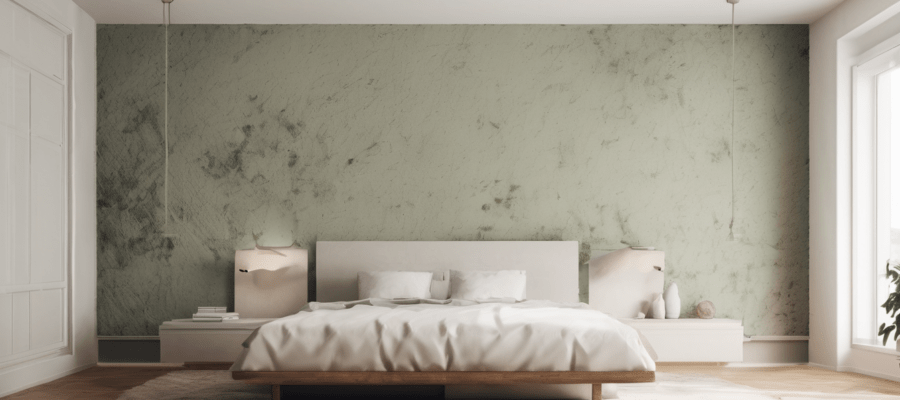
When UAE homeowners notice a dark patch on a wall or a pale coating across a bathroom tile, the instinct is often to reach for a spray and wipe it away. But mold vs mildew: what is the difference, and does it actually matter which one you are dealing with? The answer is yes, significantly. Mould and mildew are both fungal organisms, but they differ in structure, penetration depth, health implications, and the level of professional intervention each requires. Getting that distinction right is the first step toward responding correctly.
In the UAE, the conditions that favour fungal growth are everywhere: continuous air conditioning cycling through humid outdoor air, imperfectly sealed building envelopes, water tanks and pipework running through enclosed wall cavities, and occupancy patterns that keep indoor humidity elevated around the clock. Dubai apartments, Abu Dhabi villas, and Sharjah townhouses all share the same vulnerability, regardless of age or price point. Knowing whether you are looking at a surface issue or a structural one determines everything that follows.
What Mildew Actually Is
Mildew is a surface-dwelling fungal growth. It spreads in a flat, powdery, or downy layer across the top of a material rather than penetrating beneath it. Colouration is typically white, grey, or pale yellow in early stages, occasionally darkening to brown with age. Mildew thrives on organic surfaces with sufficient moisture: bathroom grout, damp cotton towels, the underside of a mattress in a poorly ventilated room, or the surface of a curtain panel near a leaking AC unit.
Because mildew remains at the surface, it is generally easier to remove with appropriate cleaning agents and improved ventilation. The presence of mildew is a reliable warning signal that moisture levels are elevated, but it does not typically indicate that the underlying material has been structurally compromised. It is a symptom worth addressing quickly, not one that requires demolition or complex remediation.
Common locations for mildew in UAE homes
In UAE residential settings, mildew most commonly appears in bathrooms with inadequate exhaust ventilation, on window sills where condensation accumulates from chilled glass meeting humid air, on stored fabrics in infrequently opened wardrobes, and on the visible surfaces of low-circulation rooms such as storage rooms or utility spaces. Powdery mildew on hard surfaces is frequently resolved through routine deep cleaning and targeted ventilation improvements.
What Mould Actually Is
Mould is a more complex organism. It grows in multi-cellular filaments called hyphae, which penetrate the material it colonises rather than sitting on top of it. This penetrative growth is what makes mould structurally significant: by the time it becomes visible on a wall surface, the colony has often already established itself within the material. Colouration ranges from green and black to blue, orange, and dark brown depending on the species present. Common indoor species identified during professional assessments in UAE buildings include Cladosporium, Aspergillus, Penicillium, and in cases of significant water intrusion, Stachybotrys chartarum.
The physical profile is also different. Mould typically appears fuzzy or raised rather than flat. It produces a distinctive musty odour as it metabolises organic material, a smell that many UAE residents describe as a persistent mustiness that air fresheners mask but never eliminate.
Why penetration depth changes everything
Because mould grows into the substrate, surface wiping does not resolve the problem. Removing visible mould from drywall with a cloth spreads spores into the air and leaves the colony root system intact inside the material. Professional mould remediation, carried out to IICRC and IAC2 standards, addresses the source, contains the affected area, removes compromised material where necessary, and verifies clearance through post-remediation assessment rather than visual inspection alone.
How to Tell Them Apart at Home
A straightforward visual and sensory assessment gives a reasonable first indication. Mildew tends to be flat, powdery, and lighter in colour, sitting cleanly on the surface. Mould is raised, fuzzy, and often darker, and the area around it may have a soft or damp texture indicating that the underlying material has absorbed moisture. The smell test is also informative: mildew produces a mild musty note, while active mould growth typically produces a stronger, earthier odour that persists even after the affected surface is cleaned.
A practical at-home test sometimes cited in remediation literature involves applying a small amount of diluted household bleach to the suspected growth. If the discolouration lightens quickly, it is consistent with mildew or surface organic staining. If the colouration persists after several applications, it suggests deeper mould growth. However, this test is indicative only. It does not identify the species present, quantify spore load, or reveal hidden colonies behind walls or inside HVAC systems.
Health Implications Side by Side
Both mildew and mould can affect occupant health, but the severity is not equivalent. Mildew exposure most commonly causes mild respiratory irritation, nasal congestion, and headaches, particularly in individuals with existing allergies or asthma. These symptoms generally resolve when the source is removed and the environment is improved.
Mould presents a broader and more serious risk profile. Certain mould species produce mycotoxins, secondary metabolites that can cause persistent respiratory symptoms, skin irritation, cognitive effects, and immune responses in sensitive occupants. Children, elderly residents, and immunocompromised individuals are at elevated risk. In UAE buildings where HVAC systems circulate air throughout the property, mould growth inside or near an AC unit can distribute spores to every room continuously, intensifying exposure without occupants being aware of the source.
When symptoms suggest more than surface mildew
Occupants who report symptoms that worsen at home but improve when travelling, recurring upper respiratory complaints without an identifiable medical cause, or persistent fatigue in a specific building should consider professional indoor air quality assessment. These patterns are commonly observed during field investigations where hidden mould colonisation has been present for months before any visible sign appears.
Conditions That Drive Both in the UAE
The UAE’s climate creates a near-constant risk window. Outdoor relative humidity regularly exceeds 80% during summer months, and the thermal gap between chilled interiors and humid external air drives condensation on walls, windows, and within HVAC components. Buildings constructed with lightweight partition walls and insufficient cavity ventilation are particularly susceptible. Recurring water leaks from neighbouring units, which are a frequent finding in older Dubai apartment buildings, introduce sustained moisture into wall and ceiling cavities where mould can establish without any visible surface indication for weeks.


Poor HVAC maintenance compounds the problem. Drain pans that overflow, evaporator coils with debris accumulation, and duct insulation that has absorbed moisture over years all provide the combination of nutrients and humidity that mould requires. The air conditioning system that is meant to manage indoor climate can become the mechanism by which mould spores travel from one room to the next.
Response Protocols Compared
Addressing mildew
Surface mildew on non-porous materials can generally be addressed through thorough cleaning with an appropriate antimicrobial agent, followed by root-cause correction, typically meaning improved ventilation, reduced indoor humidity, and elimination of the moisture source. In UAE bathrooms, this often means addressing non-functional exhaust fans, improving cross-ventilation, and ensuring AC units are draining correctly. Mildew on porous materials such as grout, fabric, or unsealed timber may require more targeted treatment or replacement of the affected item.
Addressing mould
Mould remediation is a structured professional process. IICRC S520 standards, which guide professional mould remediation practice, require containment of the affected area, safe removal of colonised materials, treatment of structural surfaces, and post-remediation verification. In the UAE, 800-MOLDS holds both IICRC and IAC2 certification, making it the first mould remediation company in the UAE to hold both credentials simultaneously. This dual certification matters because it aligns field practice with both remediation standards and indoor air quality assessment protocols.
Non-chemical remediation options are available for certain substrates and scenarios. The minimum-effective-chemical principle applies: the objective is source removal and verified clearance, not the broadest possible chemical application.
When Professional Assessment Is the Right First Step
Both mould and mildew have visible and hidden forms. What appears to be a manageable mildew patch on a bedroom wall occasionally turns out to be the surface expression of a larger mould colony inside the partition. Professional mould inspection, which typically includes moisture mapping, surface sampling, and in some cases air sampling, provides the information needed to determine the actual scope before any remediation decisions are made.
Attempting remediation without assessment risks disturbing hidden colonies, dispersing spores, and applying chemicals to materials that require physical removal rather than treatment. In UAE apartments and villas where residents invest significantly in quality of life, that kind of misstep is both avoidable and costly.
Practical Takeaways for UAE Property Owners
- Mildew is surface-level; mould penetrates. The response required is not the same.
- Colour alone does not confirm which you are dealing with. White growth on a ceiling is not automatically mildew.
- Persistent musty odour without visible growth often indicates mould inside walls, ceilings, or HVAC components.
- Humidity control is the primary prevention tool for both. Target indoor relative humidity below 60% consistently.
- HVAC maintenance matters: a poorly maintained AC unit is a documented pathway for mould spore distribution through a home.
- Occupant symptoms that improve away from home are a reason to investigate the indoor environment, not just the occupant’s health.
The Verdict
Mold vs Mildew: what is the difference comes down to depth, species, and consequence. Mildew is a surface inconvenience that signals a moisture problem worth correcting. Mould is a structural and biological concern that requires professional diagnosis, proper containment, and verified remediation. In Dubai’s climate, where humidity and continuous air conditioning create persistent risk conditions, treating either as a purely cosmetic issue is the most common and most costly mistake property owners make.
If there is uncertainty about what you are looking at, the right step is professional assessment before treatment. Correct identification determines correct response, and correct response determines whether the problem is genuinely resolved or temporarily concealed.
Frequently Asked Questions
What is the main difference between mould and mildew?
Mould penetrates the surface it colonises, growing through materials via fungal filaments called hyphae. Mildew grows in a flat layer on the surface and does not penetrate beneath it. This structural difference determines how each is treated: mildew can often be cleaned away, while mould typically requires professional remediation to address the colony at its root.
Is mildew dangerous to health?
Mildew can cause mild respiratory irritation, nasal symptoms, and headaches, particularly in individuals with allergies or asthma. It is generally less serious than mould. However, persistent mildew indicates an ongoing moisture problem, and in UAE buildings with limited ventilation, that moisture problem can escalate to mould growth if not corrected.
How does Dubai’s climate affect mould and mildew risk?
Dubai’s high outdoor humidity, often exceeding 80% in summer months, combined with continuous air conditioning use, creates condensation points throughout a building. This persistent moisture, particularly in wall cavities, around HVAC drain pans, and behind bathroom fittings, provides ideal conditions for both mildew and mould to establish. The risk is present year-round, not just seasonally.
Can mould inside an AC unit spread through a Dubai apartment?
Yes. When mould colonises evaporator coils, drain pans, or duct lining, the system distributes spores with every air cycle. In a Dubai apartment where the AC operates almost continuously, this can result in spore exposure in every room from a single hidden source. HVAC inspection and cleaning is a recommended part of any mould investigation in UAE residential buildings.
How do I know if I need professional mould inspection rather than basic cleaning?
Professional inspection is warranted when musty odour persists without a clear visible source, when occupant symptoms suggest ongoing exposure, when visible growth covers more than a small isolated area, or when there has been a water leak or flooding event. In UAE buildings, where hidden plumbing runs through wall cavities, professional moisture mapping frequently reveals colonisation that visual checks miss entirely.
What certifications should a mould remediation company in the UAE hold?
IICRC S520 certification governs professional mould remediation practice. IAC2 certification adds indoor air quality assessment credibility. In the UAE, 800-MOLDS holds both IICRC and IAC2 certification, making it the first dual-certified mould remediation company in the country. These credentials indicate that remediation practice aligns with internationally recognised standards rather than proprietary or unverified methods.
Is it possible to have mould without visible signs in a UAE home?
Yes, and this is commonly observed during professional assessments in UAE properties. Mould frequently colonises inside wall cavities, ceiling voids, behind bathroom tiles, and within HVAC ductwork without any surface indication until the colony is well established. Persistent odour, unexplained respiratory symptoms, or a history of water intrusion are reasons to investigate even when no visible growth is present. Understanding Mold vs Mildew: What Is the Difference is key to success in this area.