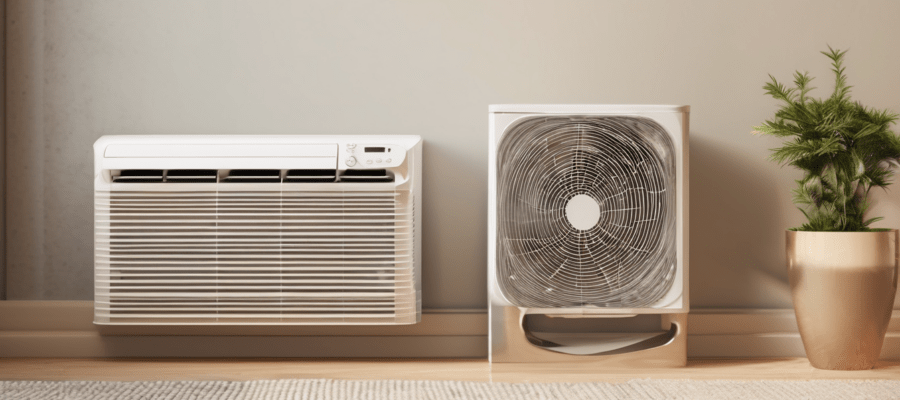
How Dirty AC coils affect your energy bill in Dubai is not an abstract concern. It is a measurable, documented pattern that Saniservice specialists observe regularly across villas, apartments, and commercial spaces throughout the emirate. Contaminated coils reduce heat transfer efficiency, force compressors to run longer, and consistently drive up electricity consumption — all without any improvement in the air you actually feel. In a city where air conditioning runs for ten to eleven months of the year, the financial consequence compounds quickly.
Dubai’s climate creates conditions that accelerate coil contamination faster than almost any other urban environment in the world. Fine desert particulates, coastal humidity, and near-continuous system operation combine to create a fouling rate that standard maintenance schedules often underestimate. By the time visible performance decline appears, energy losses have typically been accumulating for months. This relates directly to How Dirty AC Coils Affect Your Energy Bill in Dubai.
This article explains exactly what happens inside your system, why Dubai’s conditions make the problem worse, and what professional AC coil cleaning actually delivers in terms of measurable efficiency restoration.
The Science Behind How Dirty AC Coils Affect Your Energy Bill in Dubai
Your AC system transfers heat through two sets of coils: the evaporator coil inside the air handler and the condenser coil in the outdoor unit. Both rely on direct contact between refrigerant and air to move thermal energy efficiently. When a layer of dust, debris, or biological matter accumulates on either surface, it acts as an insulating barrier — reducing the rate at which heat can transfer. When considering How Dirty AC Coils Affect Your Energy Bill in Dubai, this becomes clear.
The physics is straightforward. A thin layer of contamination forces the refrigerant to work harder to achieve the same cooling effect. The compressor runs longer cycles, the system draws more current, and your DEWA bill reflects the difference. ASHRAE technical guidance consistently identifies fouled heat exchanger surfaces as one of the most significant causes of avoidable energy waste in HVAC systems.
What makes this particularly relevant to Dubai homeowners is that the insulating effect of coil fouling is not linear. Early contamination causes modest efficiency loss. As the layer thickens — which happens faster in Dubai’s dusty, humid conditions — the energy penalty grows disproportionately. A system that has gone twelve to eighteen months without coil cleaning may be consuming noticeably more electricity than a well-maintained equivalent running at the same set temperature.
How Dirty AC Coils Affect Your Energy Bill in Dubai – How Dubai’s Climate Accelerates Coil Contamination
Most general guidance on AC maintenance is written for temperate climates with seasonal system use. Dubai’s environment is fundamentally different, and understanding that difference matters when assessing how dirty AC coils affect your energy bill in Dubai.
Year-Round Operation
Dubai air conditioning systems run continuously from approximately March through November, with significant use even in the cooler months. This means coils are exposed to airborne contamination for far longer annual periods than in most other regions. Dust loading accumulates without seasonal breaks, and there is rarely a natural opportunity for coils to dry out and self-limit biological growth.
Desert Particulate Load
Dubai sits on the edge of one of the world’s most active dust-generating regions. Fine silica particles, sand, and airborne mineral matter enter outdoor condenser units continuously. Even well-sealed indoor units accumulate particulates drawn through return air pathways. This dust bonds with moisture and oils on coil surfaces, forming a compacted fouling layer that reduces airflow and heat transfer simultaneously.
Coastal Humidity and Biological Growth
The combination of warm air, persistent moisture on evaporator coil surfaces, and organic particulates creates conditions suitable for microbial growth. Biofilm on coil fins is a commonly observed finding during professional assessment of Dubai AC systems. Beyond health implications, biofilm adds thermal resistance and can partially block fin spacing, reducing both airflow volume and heat exchanger performance. The importance of How Dirty AC Coils Affect Your Energy Bill in Dubai is evident here.
Dirty AC Coils Affect Your Energy Bill in Dubai Through Multiple Pathways
It is worth being precise about the mechanisms involved, because they operate simultaneously and reinforce each other.
Reduced Heat Transfer Efficiency
The primary pathway is straightforward thermal resistance. Fouled coil surfaces transfer less heat per unit of time, meaning the refrigerant cycle must run longer to achieve the same net cooling. Compressor runtime increases, and energy consumption rises proportionally.
Restricted Airflow
Dust accumulation between coil fins reduces the cross-sectional area available for air movement. Reduced airflow means less warm indoor air reaches the evaporator coil per cycle, further reducing effective cooling capacity. The blower motor may also work harder against increased resistance, adding a secondary energy draw. Understanding How Dirty AC Coils Affect Your Energy Bill in Dubai helps with this aspect.
Compressor Stress and Extended Run Cycles
When heat transfer is impaired, refrigerant may return to the compressor at a higher temperature than designed. This increases compressor workload, accelerates wear, and in some cases can trigger protective shutdown cycles that interrupt cooling entirely. Over time, a compressor operating under persistent thermal stress has a shorter service life — converting what began as an energy bill problem into a capital replacement cost.
Reduced Cooling Capacity at Higher Ambient Temperatures
This pathway is particularly significant in Dubai. During summer months when outdoor temperatures regularly exceed 42°C, condenser coil efficiency becomes critical. A clean condenser can reject heat effectively even at high ambient temperatures. A fouled condenser struggles to do so, causing the system to lose effective cooling capacity precisely when demand is highest — and to draw peak current for extended periods during those same hours.
How Dirty AC Coils Affect Your Energy Bill in Dubai Across Property Types
The scale of the problem varies depending on how the system is configured and how the property is used, but the underlying dynamic is consistent across all residential and commercial settings in the UAE. How Dirty AC Coils Affect Your Energy Bill in Dubai factors into this consideration.
In a Dubai villa with multiple split AC units and a separate outdoor condenser for each zone, coil fouling across multiple units compounds quickly. A property with six to eight units, each operating with reduced efficiency, represents a meaningful aggregate electricity draw that professional coil cleaning can measurably reduce.
In residential towers across Dubai Marina, Downtown Dubai, or Jumeirah Village Circle, centralised chilled water systems with air handling units present a different but related challenge. Chilled water coils in AHUs accumulate fouling just as refrigerant coils do, and the energy penalty at scale — across an entire building — is proportionally larger.


Commercial facilities face an additional dimension: cooling load calculations are made at design stage with the assumption of clean, efficient coils. As coils foul, actual energy consumption drifts above design intent. Facility managers who monitor DEWA consumption data carefully will often observe a gradual upward trend between maintenance cycles that reverses following professional AC Coil Cleaning. This relates directly to How Dirty AC Coils Affect Your Energy Bill in Dubai.
What Professional AC Coil Cleaning Actually Restores
Understanding how dirty AC coils affect your energy bill in Dubai is most useful when paired with a clear picture of what qualified intervention delivers.
Professional AC coil cleaning involves more than a surface rinse. Saniservice specialists use appropriate chemical solutions matched to the contamination type — alkaline degreasers for organic fouling, coil-safe acidic treatments where mineral scaling is present — applied with controlled pressure and technique that cleans fin surfaces without causing physical damage to the delicate aluminium geometry.
Condenser coil cleaning for outdoor units in Dubai requires attention to fin straightening, debris removal from the coil bed, and verification that airflow pathways are fully open. Evaporator coil cleaning involves access to the coil within the air handler, treatment of the drain pan, and documentation of the before-and-after condition. When considering How Dirty AC Coils Affect Your Energy Bill in Dubai, this becomes clear.
Following professional coil cleaning, field assessments commonly show restored airflow volume, reduced supply air temperature (indicating improved heat transfer), and shorter compressor run cycles to achieve set-point temperatures. These are measurable outcomes, not estimates.
How Often Dubai Homes Should Address Coil Contamination
Given how dirty AC coils affect your energy bill in Dubai on an ongoing basis, the maintenance frequency question matters. NADCA-aligned guidance and field experience across UAE properties consistently support a more frequent intervention schedule than is typical in cooler climates.
For most Dubai residential properties with split AC systems, professional coil cleaning at least once annually — ideally before the peak summer demand period — represents the minimum standard. Properties near construction sites, coastal areas with higher particulate and salt loading, or homes with pets may require more frequent assessment. The importance of How Dirty AC Coils Affect Your Energy Bill in Dubai is evident here.
The pre-summer window, broadly from February through April, is the most strategically valuable time for AC coil cleaning in Dubai. It restores efficiency before the compressor faces its most demanding operating conditions, and it allows any issues identified during cleaning — such as fin damage, refrigerant concerns, or drain pan problems — to be addressed before system failure becomes a risk during peak heat.
Expert Takeaways on AC Coil Efficiency in Dubai
- Dirty coils impose an energy penalty that compounds over time — the longer fouling is left unaddressed, the greater the cumulative cost on your DEWA bill.
- Dubai’s dust, humidity, and year-round operation accelerate coil contamination compared to most other global markets.
- Both evaporator and condenser coils require professional attention — cleaning one without the other leaves efficiency losses in place.
- Compressor longevity is directly linked to coil cleanliness — coil fouling is a leading contributor to premature compressor wear in Dubai’s climate.
- Professional coil cleaning should be documented with a service report noting condition before and after treatment — this is the standard Saniservice specialists apply on every visit.
- Annual pre-summer coil cleaning is the minimum recommended schedule for Dubai residential properties; higher-use or higher-exposure properties may benefit from bi-annual assessment.
Frequently Asked Questions
How do dirty AC coils affect your energy bill in Dubai specifically?
In Dubai, dirty AC coils affect your energy bill by reducing heat transfer efficiency and forcing the compressor to run longer cycles. Because systems operate nearly year-round in Dubai’s heat, the energy penalty accumulates consistently. Field assessments regularly identify fouled coils as a primary driver of above-design electricity consumption in both residential and commercial properties across the emirate.
How much energy does a Dubai AC system waste with dirty coils?
Specific percentages vary by system type, contamination level, and operating hours. What field observations consistently show is that heavily fouled coils produce measurably longer compressor run cycles and higher supply air temperatures — both direct indicators of reduced efficiency. Professional assessment of your specific system will give you a clearer picture than any generic estimate. Understanding How Dirty AC Coils Affect Your Energy Bill in Dubai helps with this aspect.
Can dirty condenser coils outside my Dubai villa cause higher DEWA bills?
Yes. Outdoor condenser coils are particularly vulnerable in Dubai due to fine desert dust and high ambient temperatures. A fouled condenser cannot reject heat effectively, causing the compressor to draw higher current for extended periods. During summer months when ambient temperatures regularly exceed 42°C, this inefficiency is at its most severe and most costly on your DEWA statement.
Is AC coil cleaning different from AC duct cleaning?
These are distinct services that address different parts of your system. Coil cleaning focuses on the heat exchanger surfaces — evaporator and condenser — where thermal efficiency losses occur. Duct cleaning addresses the internal surfaces of the air distribution network, which affects air quality and airflow volume. Both contribute to overall system performance, but they are not interchangeable treatments.
How often should AC coils be cleaned in Dubai properties?
For most Dubai residential properties, professional AC coil cleaning at least once annually is recommended, with the period between February and April being strategically optimal before peak summer demand. Properties near construction activity, coastal zones, or with high occupant loads may benefit from more frequent assessment. A qualified technician can evaluate your specific fouling rate and recommend an appropriate schedule. How Dirty AC Coils Affect Your Energy Bill in Dubai factors into this consideration.
Can I clean AC coils myself to reduce my energy bill in Dubai?
Basic filter cleaning is a homeowner-appropriate task. Professional coil cleaning, however, requires correct chemical selection, appropriate application pressure, and knowledge of fin geometry to avoid damage. Incorrect cleaning can bend aluminium fins, reducing airflow permanently, or introduce moisture into electrical components. For measurable efficiency restoration, professional service with a documented protocol is the reliable approach.
Does AC coil cleaning actually make a visible difference to comfort in Dubai homes?
Based on field assessments following professional coil cleaning, homeowners in Dubai commonly report faster room cooling, lower supply air temperatures, and quieter compressor operation — all indicators of restored efficiency. In Dubai’s climate, where the difference between an efficient and an inefficient system is felt acutely during summer months, the comfort improvement is typically immediate and noticeable.
The Quiet Cost of Coil Contamination
Understanding how dirty AC coils affect your energy bill in Dubai matters precisely because the cost is invisible. Your system continues to cool your home — just less efficiently, for longer, at greater expense. There is no single moment of failure that prompts action. There is only a DEWA bill that climbs gradually, a compressor that wears more quickly than it should, and a level of comfort that never quite matches what the thermostat promises.
How dirty AC coils affect your energy bill in Dubai is, ultimately, a question about what you are paying for energy you are not benefiting from. Professional AC coil cleaning, carried out on a documented schedule by qualified specialists, is the most direct way to close that gap — restoring efficiency, protecting equipment, and ensuring that Dubai’s demanding climate is met by a system operating at its genuine designed capacity.
If you are ready to understand the actual condition of your coils and what restoration would look like for your property, a Saniservice assessment provides the clarity to make that decision based on evidence, not assumption. Understanding How Dirty AC Coils Affect Your Energy Bill in Dubai is key to success in this area.