AC Evaporator vs condenser coil cleaning explained clearly is something most Dubai homeowners have never encountered — until the cooling drops, the energy bill climbs, or a technician points to two very different problems inside the same system. Both coils are essential to the refrigeration cycle, yet they operate in entirely different environments, attract entirely different types of contamination, and demand entirely different cleaning approaches. Getting this distinction right is the difference between a thorough service and a partial one.
In Dubai’s climate, where air conditioning runs for the better part of ten months each year, coil hygiene carries real consequences. Temperatures regularly exceed 40°C outdoors while indoor spaces demand sustained cooling. That continuous demand places both coils under persistent stress — and makes contamination accumulate faster than in more temperate climates. Understanding what each coil does, where it sits, and why it gets dirty is the starting point for any honest conversation about AC coil cleaning in Dubai. This relates directly to AC Evaporator vs Condenser Coil Cleaning.
This article examines the AC evaporator vs condenser coil cleaning explained side by side: where each coil is located, how each becomes contaminated, what cleaning each requires, how difficult each is to access, and what happens when either is neglected. The goal is to give homeowners and facility managers a clear framework for making informed decisions about their AC maintenance.
What Each Coil Does and Where It Lives
The evaporator coil sits inside the air handler or indoor unit. It is the coil that absorbs heat from the room air passing over it, causing the refrigerant inside to evaporate. This process cools the air, which is then circulated back into the living space. Because warm indoor air is constantly drawn across this coil, any particles carried in that air — dust, skin cells, pet dander, mould spores — eventually settle on its surface. When considering AC Evaporator vs Condenser Coil Cleaning, this becomes clear.
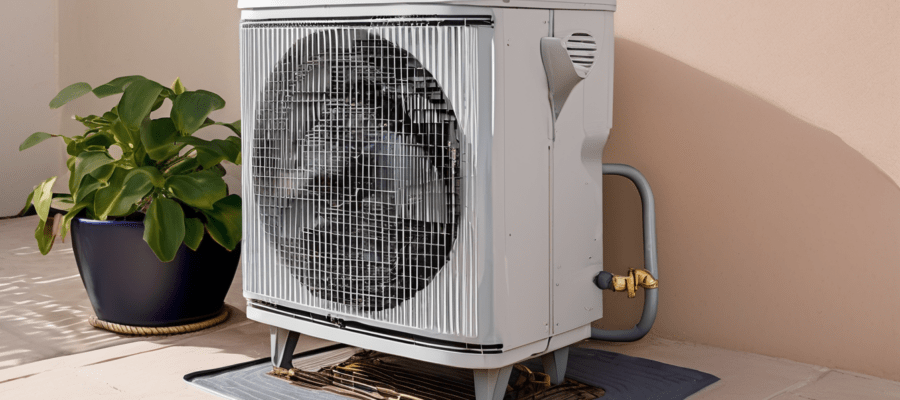
The condenser coil sits in the outdoor unit. It is the coil that releases the absorbed heat to the outside air. A fan draws outdoor air across it to carry the heat away. In Dubai, the outdoor unit is exposed to ambient temperatures regularly above 40°C, fine desert dust, coastal salt air near marine areas, and occasional sand-laden wind. The condenser coil therefore faces entirely different environmental stressors than its indoor counterpart.
Understanding this physical separation is central to the AC evaporator vs condenser coil cleaning explained conversation. The two coils are not interchangeable in function, location, or contamination profile.
AC Evaporator vs Condenser Coil Cleaning Explained — Contamination Compared
What Builds Up on Evaporator Coils
Because the evaporator coil operates in a consistently humid microenvironment — condensation forms on it during normal operation — it creates conditions that support microbial activity. Dust and particulate matter collect between the tightly spaced fins. Moisture binds that accumulation into a layer that progressively restricts airflow and reduces heat exchange efficiency. The importance of AC Evaporator vs Condenser Coil Cleaning is evident here.
Mould growth on evaporator coils is a commonly observed finding during professional assessment of split AC units in Dubai villas and apartments. The combination of organic matter, sustained moisture, and the near-zero airflow at the coil surface creates conditions where microbial colonies can establish themselves. This is one reason why indoor air quality and coil hygiene are directly connected — a contaminated evaporator coil can influence what circulates through the room.
What Builds Up on Condenser Coils
The condenser coil faces a very different contamination challenge. Fine desert dust — common across the UAE — enters the outdoor unit and packs between the aluminium fins over time. Coastal areas in Dubai, Abu Dhabi, Sharjah, and Ras Al Khaimah add salt deposits that can accelerate fin corrosion. Cottonwood fibre, insect debris, and general atmospheric particulates also accumulate.
Unlike the evaporator coil, the condenser coil does not typically support significant microbial growth — the outdoor heat and UV exposure limit that risk. However, a blocked condenser coil causes the refrigerant to run at higher pressure and temperature, placing strain on the compressor and reducing overall system efficiency measurably. Understanding AC Evaporator vs Condenser Coil Cleaning helps with this aspect.
AC Evaporator vs Condenser Coil Cleaning Explained — Access and Difficulty
Accessing the Evaporator Coil
The evaporator coil is the more challenging of the two to access. In split AC units, the indoor casing must be opened, the filters removed, and often additional panels disassembled before the coil face is visible. In ducted central systems, access may require entering an air handling unit (AHU) cabinet or, in some configurations, partial disassembly of ductwork connections. This is not a task suited to improvised cleaning.
Proper evaporator coil cleaning also demands care around the drain pan below the coil. If the drain pan is neglected during a coil clean, dislodged debris flows directly into it, potentially blocking the condensate drain line and causing water overflow. A professional service addresses both components together as part of a documented protocol.
Accessing the Condenser Coil
The condenser coil is generally more accessible — the outdoor unit is typically reachable, and the coil face is visible once the top panel is removed. However, safe access on high-rise residential towers in Dubai Marina, Business Bay, or Jumeirah Lakes Towers requires working at elevation, which introduces safety requirements that go beyond the cleaning task itself. AC Evaporator vs Condenser Coil Cleaning factors into this consideration.
For villa properties, ground-level condensers are more straightforward to reach, but the cleaning method still matters. High-pressure water directed incorrectly can bend aluminium fins, reducing airflow and defeating the purpose of the service. NADCA-aligned methodology specifies controlled pressure and appropriate coil cleaning chemistry based on contamination type.
Cleaning Methods — Side by Side
Evaporator Coil Cleaning Methods
Evaporator coil cleaning typically involves a combination of dry vacuuming to remove loose particulate matter, followed by the application of a coil-safe cleaning solution to address bound contamination and microbial residue. The solution must be appropriate for direct indoor application — aggressive chemical agents that volatilise indoors are incompatible with occupied residential environments.
Where mould is present on the evaporator coil, a targeted disinfection step is added to the documented protocol. This is distinct from standard dust removal and requires both appropriate chemistry and sufficient dwell time to be effective. The drain pan is cleaned and inspected as part of the same service visit. This relates directly to AC Evaporator vs Condenser Coil Cleaning.
Condenser Coil Cleaning Methods
Condenser coil cleaning typically uses controlled water rinsing — often with a non-acidic degreasing agent applied first to loosen compacted dust and atmospheric deposits. The rinsing direction matters: water should flow from inside the coil outward to push contamination away from the fin pack rather than deeper into it.
Fin straightening may also be required where years of accumulated debris and improper previous cleaning attempts have bent the aluminium fins. Bent fins reduce the airflow cross-section through the condenser, limiting heat rejection and stressing the refrigerant circuit.


AC Evaporator vs Condenser Coil Cleaning Explained — Impact on Performance
Both coils affect system performance directly, but through different mechanisms. A dirty evaporator coil reduces the system’s ability to absorb heat from the room, meaning the compressor must run longer to achieve the same cooling effect. This directly increases electricity consumption — a well-documented relationship in HVAC engineering literature. When considering AC Evaporator vs Condenser Coil Cleaning, this becomes clear.
A dirty condenser coil reduces the system’s ability to reject heat outdoors. In Dubai’s summer, where ambient temperatures regularly approach or exceed 45°C, a condenser coil that is 30 to 40 per cent blocked by dust and debris places the refrigerant circuit under significant additional strain. Compressor overheating and premature failure are among the outcomes frequently identified in field investigations of systems that have not received regular condenser maintenance.
The AC evaporator vs condenser coil cleaning explained comparison therefore reveals that neglecting either coil carries real operational and financial consequences. They are complementary components of one refrigeration cycle, and a partial service — cleaning only one — leaves the other as the limiting factor in system performance.
Read more: How Often Should AC Coils Be Cleaned in Dubai
How Often Should Each Coil Be Cleaned in Dubai
Industry standards and field experience in the UAE suggest that both coils benefit from at least one professional service per year in residential settings. Given the year-round AC demand and the high levels of fine atmospheric dust across Dubai, Abu Dhabi, Sharjah, Ajman, and Ras Al Khaimah, properties in dusty zones or near coastal areas may benefit from a second service cycle. The importance of AC Evaporator vs Condenser Coil Cleaning is evident here.
The pre-summer period — typically March through to late April — is the most strategically sound time to address both coils. This timing ensures the system enters peak demand months in optimal condition rather than carrying accumulated contamination from the preceding year into the highest-stress period of the cooling season.
Properties with known indoor air quality concerns, recent moisture events, or occupants with respiratory sensitivities should consider a professional assessment to determine the appropriate cleaning frequency rather than relying on a fixed schedule.
AC Evaporator vs Condenser Coil Cleaning Explained — The Verdict
If the AC evaporator vs condenser coil cleaning explained question comes down to which matters more, the honest answer is: both matter, and for different reasons. The evaporator coil directly affects indoor air quality and the thermal performance of the air being delivered to the room. The condenser coil directly affects compressor longevity and the efficiency of the refrigeration cycle in ambient temperatures that are among the most demanding in the world.
A service that addresses only one coil is an incomplete service. A professional AC Coil Cleaning in Dubai should document both: the condition found, the method applied, and the outcome achieved. That documentation is the difference between a maintenance record and a service receipt.
For homeowners and facility managers evaluating AC coil cleaning services, the right question is not which coil needs cleaning — it is whether the provider has the methodology, chemistry, and documentation practice to address both thoroughly. That standard is worth asking for before any service begins.
Expert Takeaways for Dubai Property Owners
- Always confirm that a quoted AC coil cleaning service covers both the evaporator coil and the condenser coil — specify this before the visit.
- Ask whether the drain pan is included in the evaporator service scope; a cleaned coil with a blocked drain pan solves half the problem.
- In coastal areas of Dubai, Abu Dhabi, and Sharjah, request that the condenser cleaning protocol accounts for salt deposit removal, not just dust removal.
- Where mould is suspected on the evaporator coil, request a documented disinfection step rather than a standard dust-clean alone.
- Pre-summer service — before May — is the most operationally sound timing for both coils in the UAE climate cycle.
- Request a service report after each visit; documented protocol and before-and-after condition notes are the mark of a professional service.
Frequently Asked Questions
What is the main difference between evaporator and condenser coil cleaning?
The evaporator coil sits indoors and collects dust, moisture, and microbial matter from the room air. The condenser coil sits outdoors and accumulates desert dust, salt deposits, and atmospheric debris. Each requires different cleaning chemistry, different access procedures, and addresses different performance risks. Both are necessary for a complete AC coil service. Understanding AC Evaporator vs Condenser Coil Cleaning helps with this aspect.
How often should AC coils be cleaned in Dubai?
Most residential properties in Dubai benefit from professional coil cleaning at least once per year, ideally before the summer peak — typically between March and late April. Properties in dusty areas, near the coast, or those running AC continuously throughout the year may warrant a second service cycle. A professional assessment can determine the appropriate frequency for a specific property.
Can a dirty evaporator coil affect indoor air quality?
Yes. The evaporator coil operates in a humid microenvironment that can support microbial growth when contaminated with organic particulate matter. Air passing across a contaminated coil can carry biological particles into the room. This is one of the most commonly observed findings during indoor air quality assessments of split AC units in Dubai apartments and villas.
Does a dirty condenser coil increase electricity bills?
A blocked condenser coil reduces the system’s ability to reject heat outdoors. In Dubai’s summer climate, this forces the compressor to work harder and run longer, which increases electricity consumption measurably. Regular condenser cleaning is one of the most practical steps a property owner can take to maintain system efficiency and reduce DEWA electricity costs.
Is it safe to clean AC coils without professional help in Dubai?
Filter cleaning is within reach of most homeowners. Coil cleaning — particularly evaporator coil access in split units or condenser cleaning on high-rise balcony units — requires appropriate tools, chemistry, and safety awareness. Incorrect pressure, incompatible cleaning agents, or disrupted drain pans can cause more damage than the contamination being addressed. Professional service with a documented protocol is the recommended approach.
What should I look for when choosing an AC coil cleaning service in Dubai?
Look for a provider that addresses both the evaporator and condenser coil as standard scope, includes drain pan inspection, uses coil-safe cleaning chemistry appropriate for indoor application, and provides a written service report. NADCA-aligned methodology is a recognised benchmark for duct and coil cleaning standards. A service without documentation is difficult to evaluate or repeat consistently.
Does coil cleaning differ between villa and apartment AC systems in Dubai?
Yes. Ducted central systems common in Dubai villas often have AHU-mounted evaporator coils that require different access procedures compared to the wall-mounted split units found in apartments. Condenser unit placement — ground level in villas versus high-rise balcony or rooftop in apartment towers — also affects access method and safety requirements. A professional assessment scopes each property individually. Understanding AC Evaporator vs Condenser Coil Cleaning is key to success in this area.